Tell us about the job
Takes about a minute. No obligation.
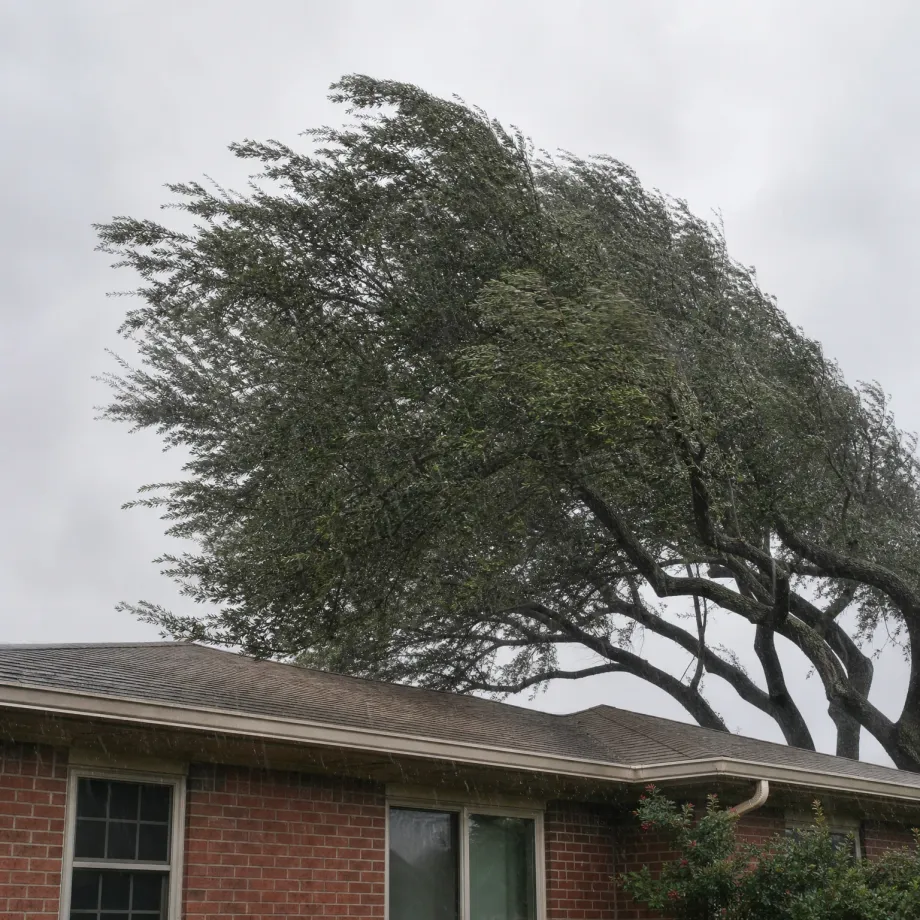
A contractor quoting a central AC installation in Rowan County has to settle the sizing question before anything else, and the area's weather record is one input but not the deciding one. 128 severe weather events were recorded in Rowan County, North Carolina between 2015 and 2024. At that rate, severe weather is a real but occasional presence rather than a constant grind on equipment, which means an undersized or poorly installed system will fail here for reasons the weather cannot be blamed for. A contractor who specs the unit to the house, seals the ductwork correctly, and sets the refrigerant charge accurately gives the system what it needs to last, regardless of what any given summer brings.
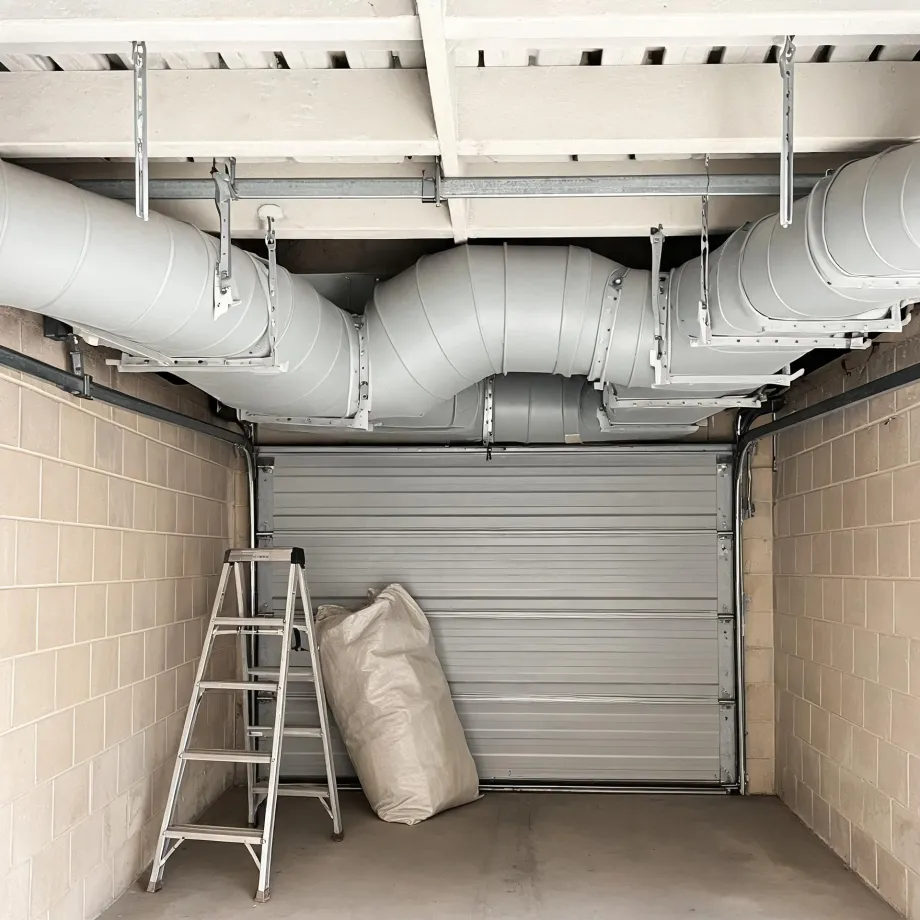
Existing ductwork is what a contractor prices against first when quoting a central AC installation here. Half the homes in Rowan County, North Carolina were built in 1983 or earlier (2020-2024 ACS 5-year). A house of that vintage was built around the equipment of that era, and the ducts that ran through it were sized and routed accordingly. A new central system draws and distributes differently. What the contractor has to determine is whether those ducts carry the new load without modification, or whether sections need to be reworked before the unit goes in. The electrical follows the same question.
What Gets Installed With a New Central AC
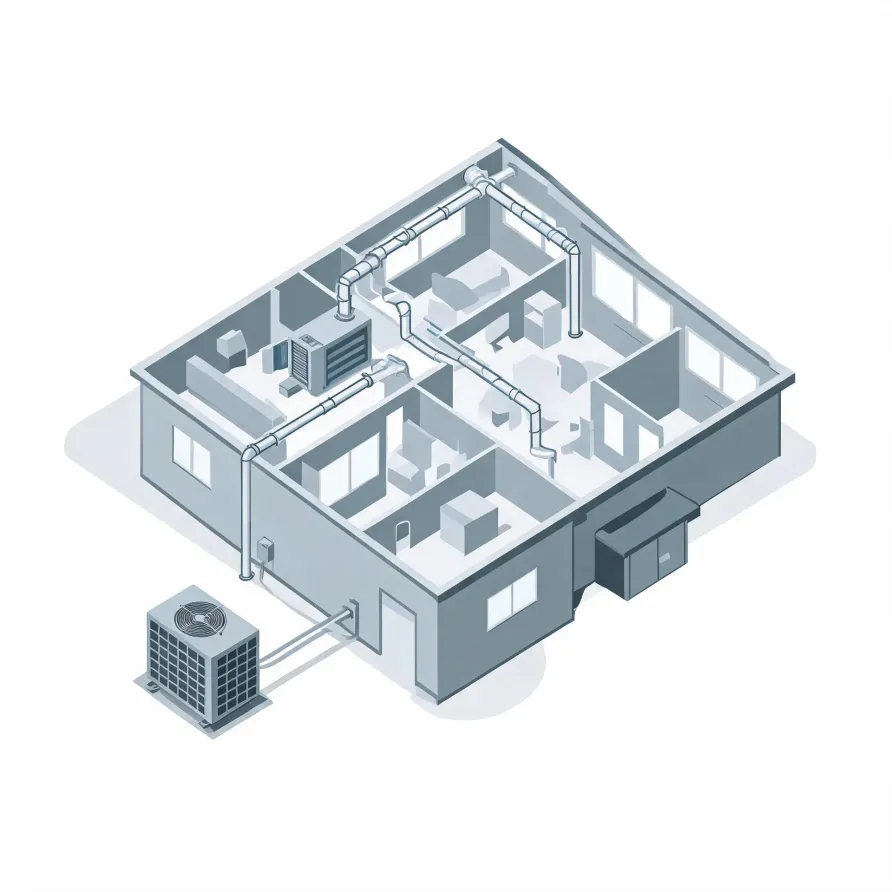
The outdoor unit sits on a concrete pad outside the house and holds the compressor and condenser coil. The indoor air handler or furnace with its evaporator coil mounts inside, usually in a closet, basement, or attic. These two units are the core of what a contractor brings to the job.
A refrigerant line set runs between the two units, connecting them through the wall or floor. A thermostat goes on an interior wall, giving the household a single point of control over the whole system. The condensate drain line runs from the indoor unit to a nearby drain to carry away moisture.
The drawing shows a typical layout, and a licensed contractor determines what the configuration looks like in your specific home.
Find a contractor in Rowan CountyRowan County, by the numbers
128 severe weather events were recorded in Rowan County, North Carolina between 2015 and 2024.
NOAA National Centers for Environmental Information, Storm Events Database, bulk CSV export, events 2015-01-01 through 2024-12-31.Half the homes in Rowan County, North Carolina were built in 1983 or earlier (2020-2024 ACS 5-year).
U.S. Census Bureau, 2020-2024 American Community Survey 5-Year EstimatesRowan County, North Carolina holds 64,975 housing units (2020-2024 ACS 5-year).
U.S. Census Bureau, 2020-2024 American Community Survey 5-Year EstimatesOwners occupy 72.3% of the occupied homes in Rowan County, North Carolina (2020-2024 ACS 5-year).
U.S. Census Bureau, 2020-2024 American Community Survey 5-Year EstimatesCode & Licensing Record for Central AC Installation in Rowan County, North Carolina10 sourced rules and standards
What HVAC Installation Looks Like in Rowan County
Split-system central air conditioners rated below 45,000 Btu/h manufactured on or after January 1, 2023 must meet a federal minimum of 13.4 SEER2.
Split-system central air conditioners rated at or above 45,000 Btu/h manufactured on or after January 1, 2023 must meet a federal minimum of 13.4 SEER2.
Split-system central air conditioners manufactured between January 1, 2015 and December 31, 2022 had to meet 13 SEER, the metric that preceded SEER2.
Single-package central air conditioners manufactured on or after January 1, 2023 must meet a federal minimum of 13.4 SEER2.
Space-constrained central air conditioners manufactured on or after January 1, 2023 must meet a federal minimum of 11.7 SEER2.
Federal efficiency standards for split-system central air conditioners and heat pumps are set on each certified combination of outdoor unit and indoor coil rather than on the outdoor unit alone.
Residential and light commercial air conditioning and heat pump systems assembled in the field, including mini-splits and unitary systems, may not be installed on or after January 1, 2025 using a refrigerant with a global warming potential above 700.
A field-assembled system whose specified components were all manufactured or imported before January 1, 2025 carries no installation compliance date under the refrigerant restrictions and may still be installed.
Licensing Rules for Rowan County, North Carolina
North Carolina issues Class I heating licenses covering all systems in all structures, and Class II licenses covering heating systems in single-family detached residential dwellings.
North Carolina requires a license before any person or firm may engage in, or offer to engage in, the business of heating contracting.
Severe Weather Events in Rowan County
Weather stress is one of the real workload drivers for central AC equipment, and Rowan County's climate is its own set of conditions. What a system endures here shapes how it should be sized, installed, and built to last.
128 severe weather events, 2015–2024. Source: NOAA National Centers for Environmental Information, Storm Events Database.