Tell us about the job
Takes about a minute. No obligation.
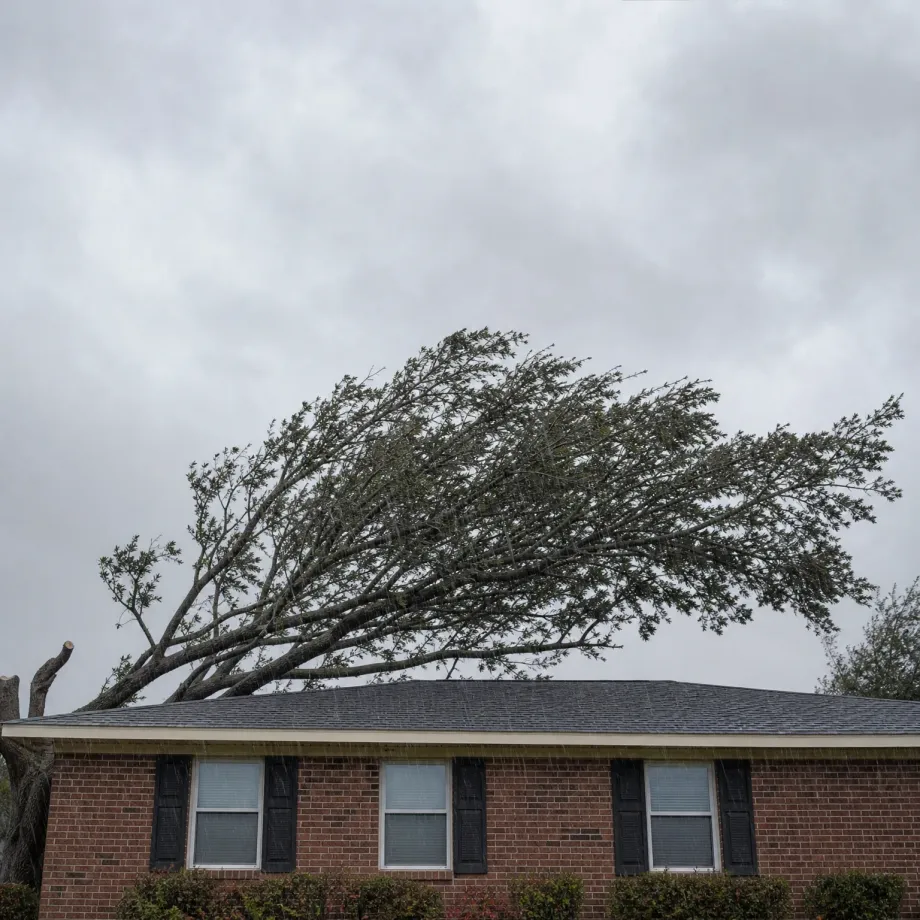
A contractor called out for a central AC repair in Wayne County is not walking into a weather-battered system by default. 109 severe weather events were recorded in Wayne County, North Carolina between 2015 and 2024. That puts this county near the middle of the national spread, which means the compressor that quit or the coil that froze is more likely worn from poor installation or skipped service than from storm load. A contractor will check refrigerant charge, contactor condition, and filter history before the weather becomes part of the conversation.
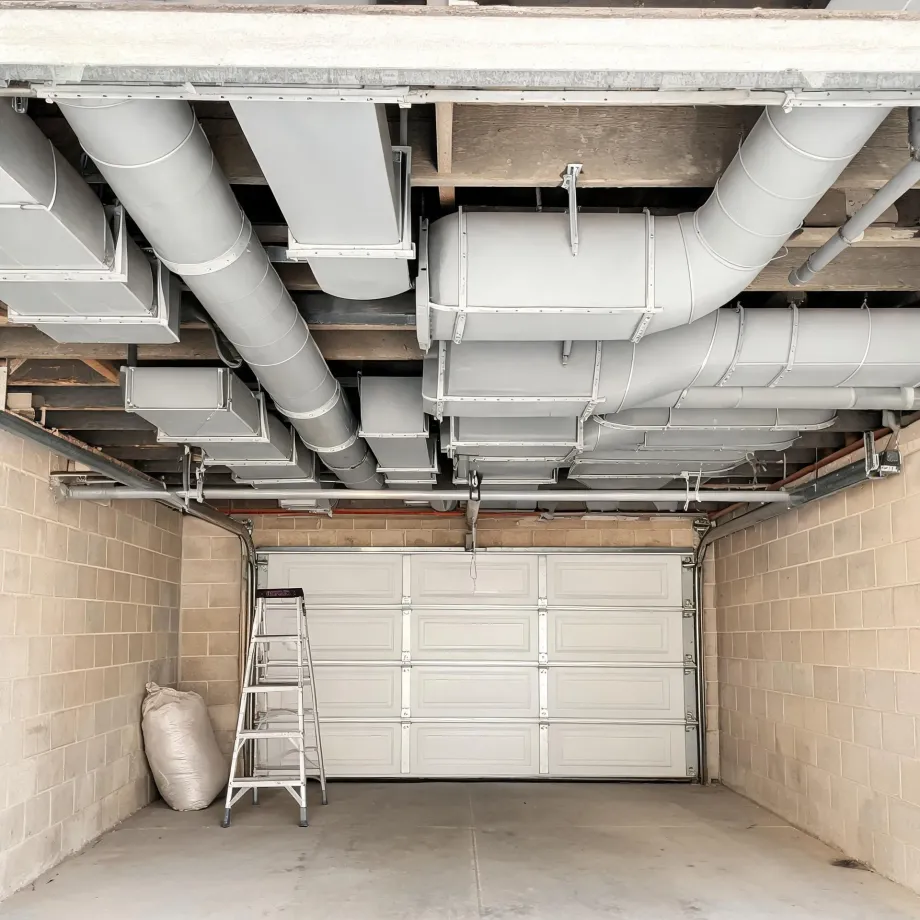
Older ductwork and wiring tell part of the story in a repair call, but the harder variable is what comes out of the unit once a contractor opens it. Half the homes in Wayne County, North Carolina were built in 1984 or earlier (2020-2024 ACS 5-year). Systems running in houses of that vintage have typically outlasted their original components, been patched with whatever was available at the time, and now carry a mix of parts that do not always have a clean replacement on the shelf. A contractor working a repair here spends real time tracing what the system actually contains before a part can be ordered.
The Parts of a Central AC a Contractor Checks First
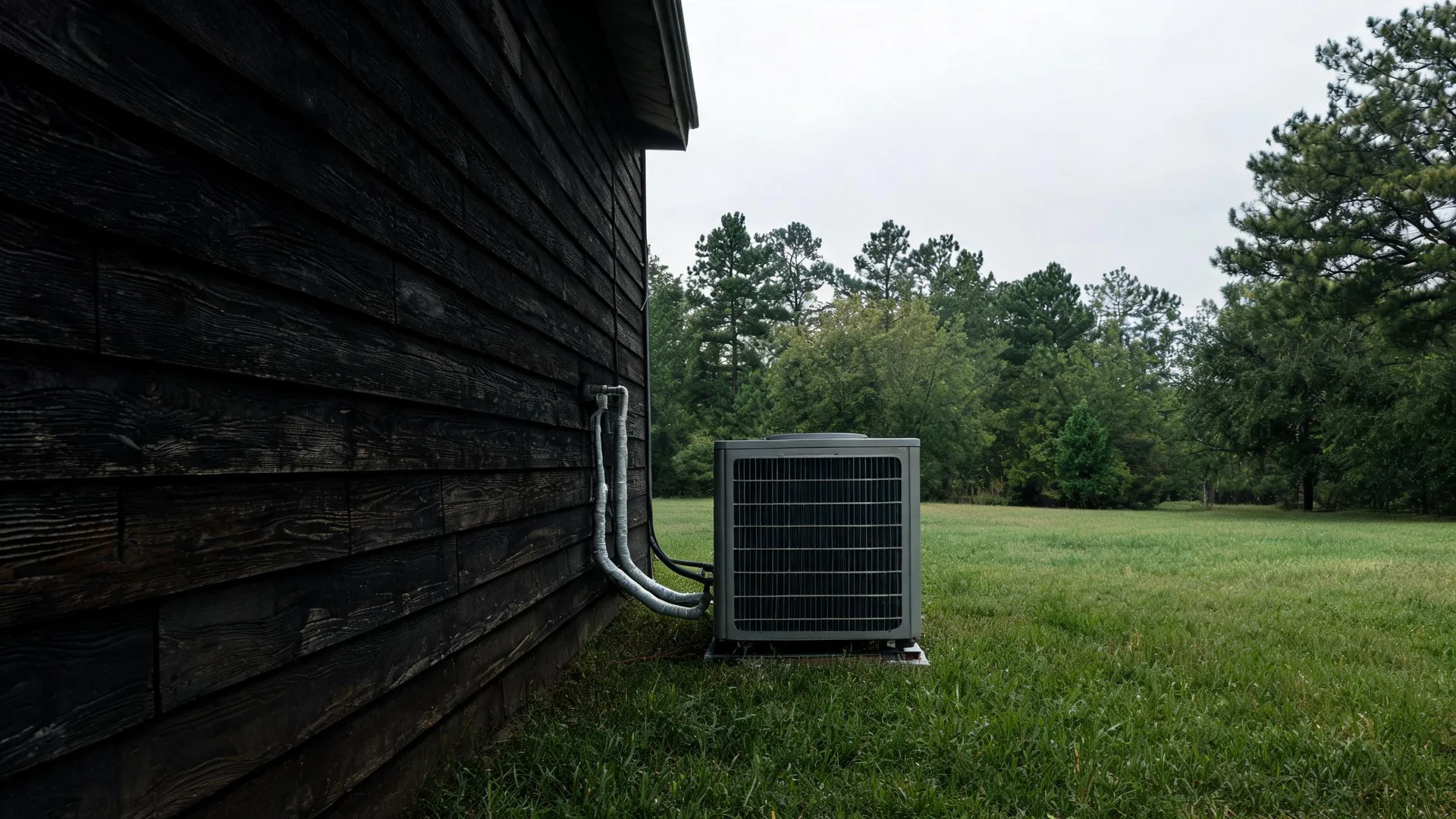
The outdoor condenser unit sits outside the house, usually on a concrete pad along the foundation, and it holds the compressor and condenser coil. These are the pieces a contractor reaches first when a system stops cooling. A failed compressor, a leaking coil, or a seized fan motor in that cabinet accounts for a large share of repair calls.
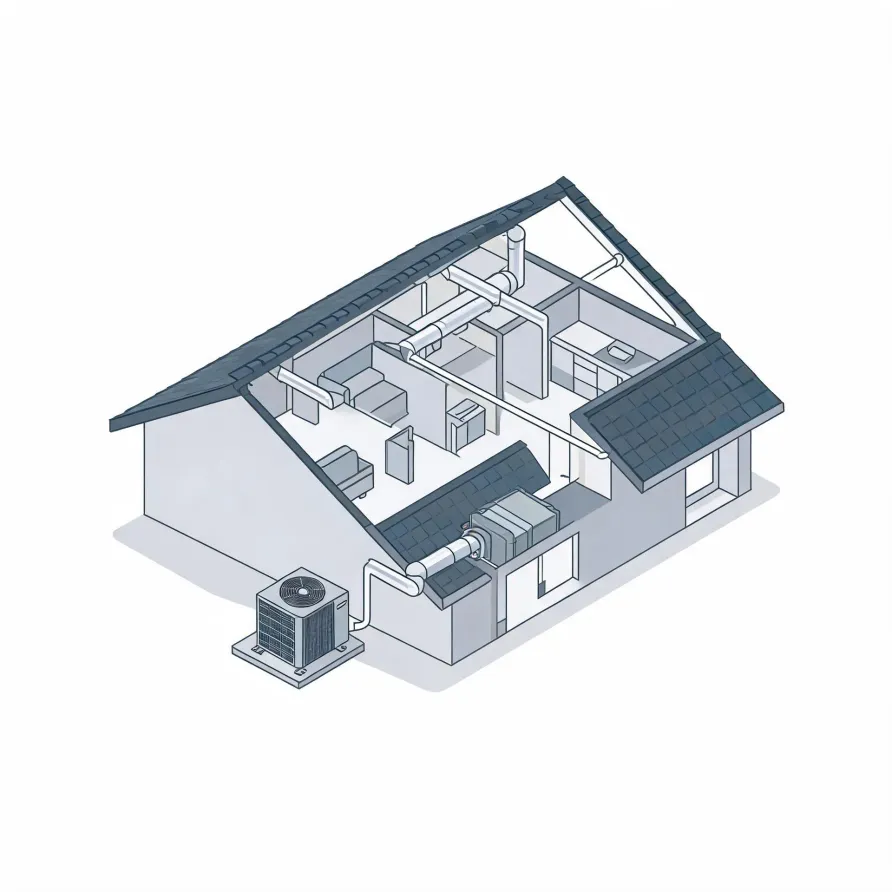
Inside the house, the air handler or furnace cabinet contains the evaporator coil and the blower. The evaporator coil is where refrigerant does its work, and a frozen coil or a cracked heat exchanger sends a contractor straight to that cabinet. The refrigerant lines connect the two units, and the thermostat on the wall is the control signal the contractor tests early, since a wiring fault there can mimic a system failure.
The drawing shows the general layout of a central AC system, and a licensed contractor determines which components apply to your particular house and situation.
Find a contractor in Wayne CountyWayne County, by the numbers
109 severe weather events were recorded in Wayne County, North Carolina between 2015 and 2024.
NOAA National Centers for Environmental Information, Storm Events Database, bulk CSV export, events 2015-01-01 through 2024-12-31.Half the homes in Wayne County, North Carolina were built in 1984 or earlier (2020-2024 ACS 5-year).
U.S. Census Bureau, 2020-2024 American Community Survey 5-Year EstimatesWayne County, North Carolina holds 53,505 housing units (2020-2024 ACS 5-year).
U.S. Census Bureau, 2020-2024 American Community Survey 5-Year EstimatesOwners occupy 61.5% of the occupied homes in Wayne County, North Carolina (2020-2024 ACS 5-year).
U.S. Census Bureau, 2020-2024 American Community Survey 5-Year EstimatesCodes & Standards Behind Central AC Repair in Wayne County, North Carolina10 sourced rules and standards
What happens when the contractor comes out
Split-system central air conditioners rated below 45,000 Btu/h manufactured on or after January 1, 2023 must meet a federal minimum of 13.4 SEER2.
Split-system central air conditioners rated at or above 45,000 Btu/h manufactured on or after January 1, 2023 must meet a federal minimum of 13.4 SEER2.
Split-system central air conditioners manufactured between January 1, 2015 and December 31, 2022 had to meet 13 SEER, the metric that preceded SEER2.
Single-package central air conditioners manufactured on or after January 1, 2023 must meet a federal minimum of 13.4 SEER2.
Space-constrained central air conditioners manufactured on or after January 1, 2023 must meet a federal minimum of 11.7 SEER2.
Federal efficiency standards for split-system central air conditioners and heat pumps are set on each certified combination of outdoor unit and indoor coil rather than on the outdoor unit alone.
Residential and light commercial air conditioning and heat pump systems assembled in the field, including mini-splits and unitary systems, may not be installed on or after January 1, 2025 using a refrigerant with a global warming potential above 700.
A field-assembled system whose specified components were all manufactured or imported before January 1, 2025 carries no installation compliance date under the refrigerant restrictions and may still be installed.
Licensing Rules in Wayne County, North Carolina
North Carolina issues Class I heating licenses covering all systems in all structures, and Class II licenses covering heating systems in single-family detached residential dwellings.
North Carolina requires a license before any person or firm may engage in, or offer to engage in, the business of heating contracting.
Severe Weather Events in Wayne County
Weather puts real hours on AC equipment. Every storm cycle, humidity spike, and power fluctuation is a load the system absorbs, and that wear is local, shaped by what this area actually sees.
109 severe weather events, 2015–2024. Source: NOAA National Centers for Environmental Information, Storm Events Database.