Tell us about the job
Takes about a minute. No obligation.
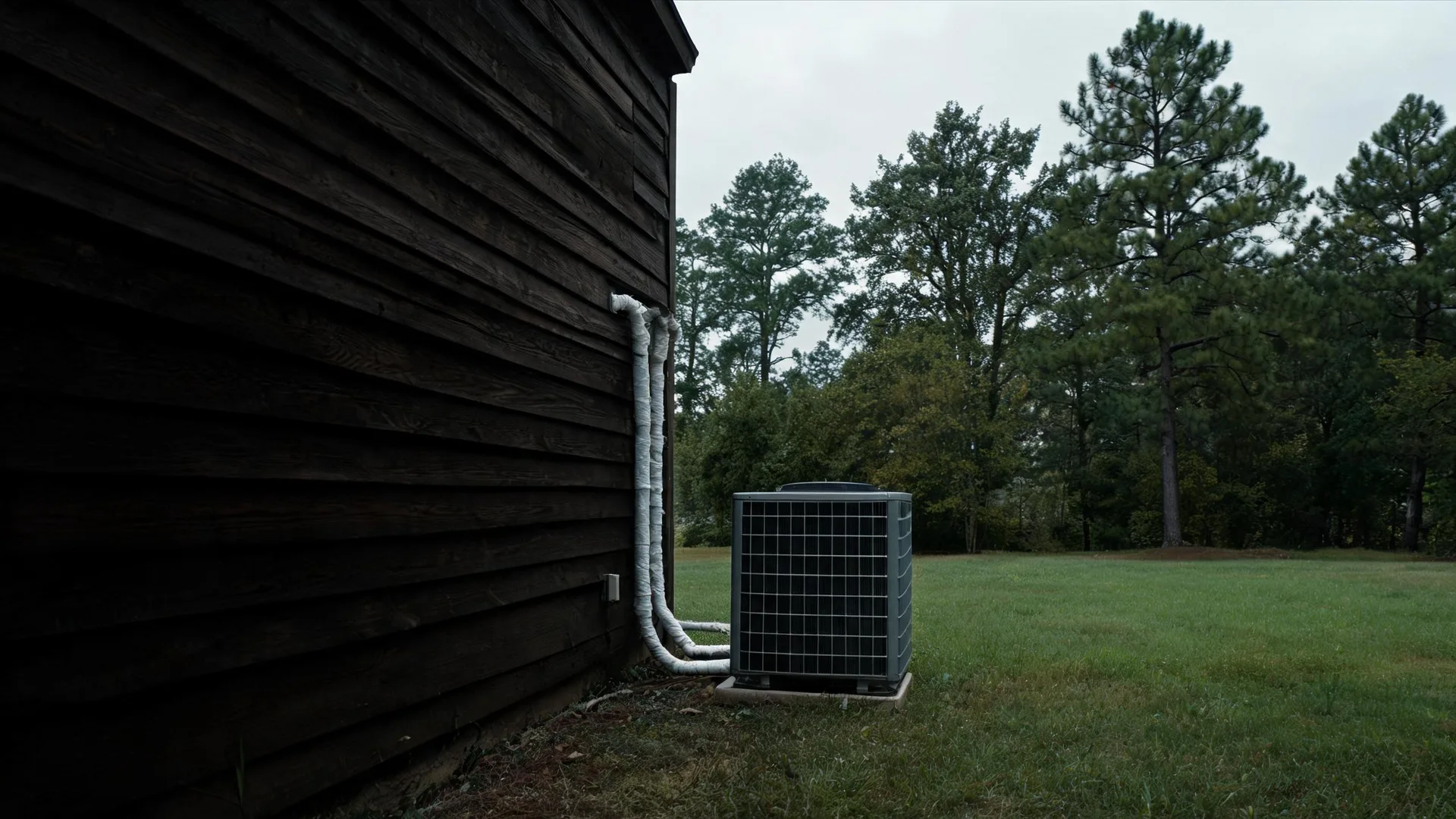
A contractor diagnosing a failed central AC unit in Hoke County starts with the system's service history and the age of its components, because those are the things most likely to explain what broke. 61 severe weather events were recorded in Hoke County, North Carolina between 2015 and 2024. At that rate, severe weather is a periodic fact of life here, not a relentless grind on equipment. A capacitor that has given out or a refrigerant line that has degraded points to years of summer run time and skipped maintenance, and that is where the repair conversation begins.
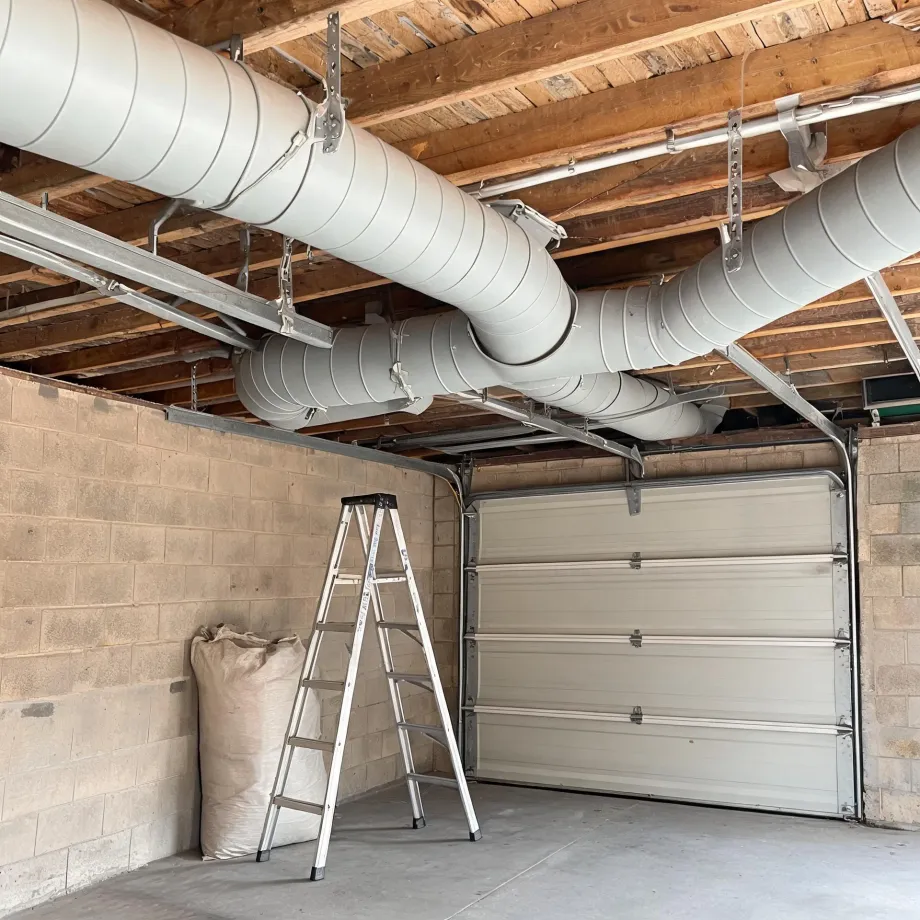
Parts availability is what decides how a central AC repair goes in much of Hoke County's housing. Half the homes in Hoke County, North Carolina were built in 2000 or earlier (2020-2024 ACS 5-year). A house that has stood long enough to see several generations of equipment installed in it is not the constraint a contractor works around; it is the refrigerant type, the capacitor spec, or the control board model that determines whether a repair closes in a day or stretches into a sourcing problem. When a part is no longer in production, a contractor quotes a repair against what can still be found, not against what the original system called for.
The Parts of a Central AC a Contractor Checks First
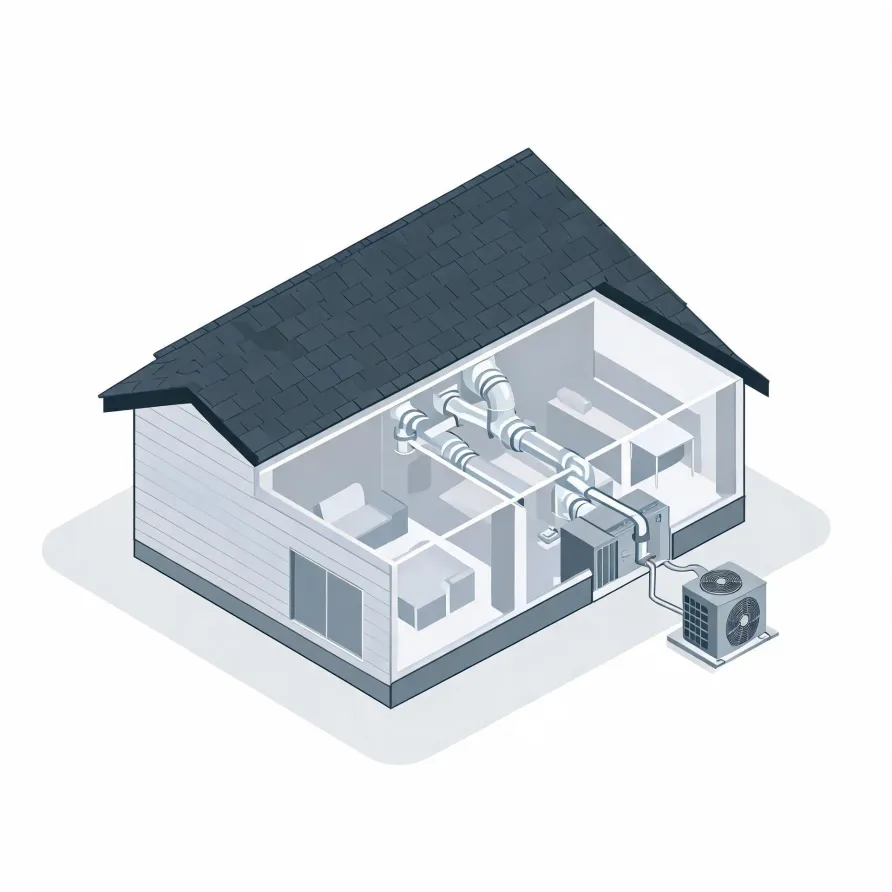
The outdoor condenser unit sits outside the house, usually on a concrete pad along an exterior wall, and it carries the compressor and the condenser coil. When refrigerant pressure is off, the compressor is the first place a contractor looks. The indoor air handler or furnace coil sits inside, typically in a closet, attic, or utility room, and holds the evaporator coil where warm air passes over cold refrigerant.
The refrigerant lines are the copper tubing that run between the two units, and a leak anywhere along them affects the whole system. The air handler also contains the blower fan and the expansion valve, both of which a contractor checks when airflow or temperature complaints point inside rather than outside.
The drawing shows a typical layout, and a licensed contractor determines which components apply and what work is needed in your specific home.
Find a contractor in Hoke CountyHoke County by the Numbers
61 severe weather events were recorded in Hoke County, North Carolina between 2015 and 2024.
NOAA National Centers for Environmental Information, Storm Events Database, bulk CSV export, events 2015-01-01 through 2024-12-31.Half the homes in Hoke County, North Carolina were built in 2000 or earlier (2020-2024 ACS 5-year).
U.S. Census Bureau, 2020-2024 American Community Survey 5-Year EstimatesHoke County, North Carolina holds 20,921 housing units (2020-2024 ACS 5-year).
U.S. Census Bureau, 2020-2024 American Community Survey 5-Year EstimatesOwners occupy 73.0% of the occupied homes in Hoke County, North Carolina (2020-2024 ACS 5-year).
U.S. Census Bureau, 2020-2024 American Community Survey 5-Year EstimatesCodes & Standards Covering Central AC Repair in Hoke County, North Carolina10 sourced rules and standards
What Happens When a Contractor Shows Up
Split-system central air conditioners rated below 45,000 Btu/h manufactured on or after January 1, 2023 must meet a federal minimum of 13.4 SEER2.
Split-system central air conditioners rated at or above 45,000 Btu/h manufactured on or after January 1, 2023 must meet a federal minimum of 13.4 SEER2.
Split-system central air conditioners manufactured between January 1, 2015 and December 31, 2022 had to meet 13 SEER, the metric that preceded SEER2.
Single-package central air conditioners manufactured on or after January 1, 2023 must meet a federal minimum of 13.4 SEER2.
Space-constrained central air conditioners manufactured on or after January 1, 2023 must meet a federal minimum of 11.7 SEER2.
Federal efficiency standards for split-system central air conditioners and heat pumps are set on each certified combination of outdoor unit and indoor coil rather than on the outdoor unit alone.
Residential and light commercial air conditioning and heat pump systems assembled in the field, including mini-splits and unitary systems, may not be installed on or after January 1, 2025 using a refrigerant with a global warming potential above 700.
A field-assembled system whose specified components were all manufactured or imported before January 1, 2025 carries no installation compliance date under the refrigerant restrictions and may still be installed.
Licensing and Legal Requirements in Hoke County, North Carolina
North Carolina issues Class I heating licenses covering all systems in all structures, and Class II licenses covering heating systems in single-family detached residential dwellings.
North Carolina requires a license before any person or firm may engage in, or offer to engage in, the business of heating contracting.
Severe Weather Events in Hoke County
Weather puts a measurable load on cooling equipment. How hard a system has to work, and how often it strains to keep up, is a local fact, and that makes repair demand in Hoke County a local question.
61 severe weather events, 2015–2024. Source: NOAA National Centers for Environmental Information, Storm Events Database.