Tell us about the job
Takes about a minute. No obligation.
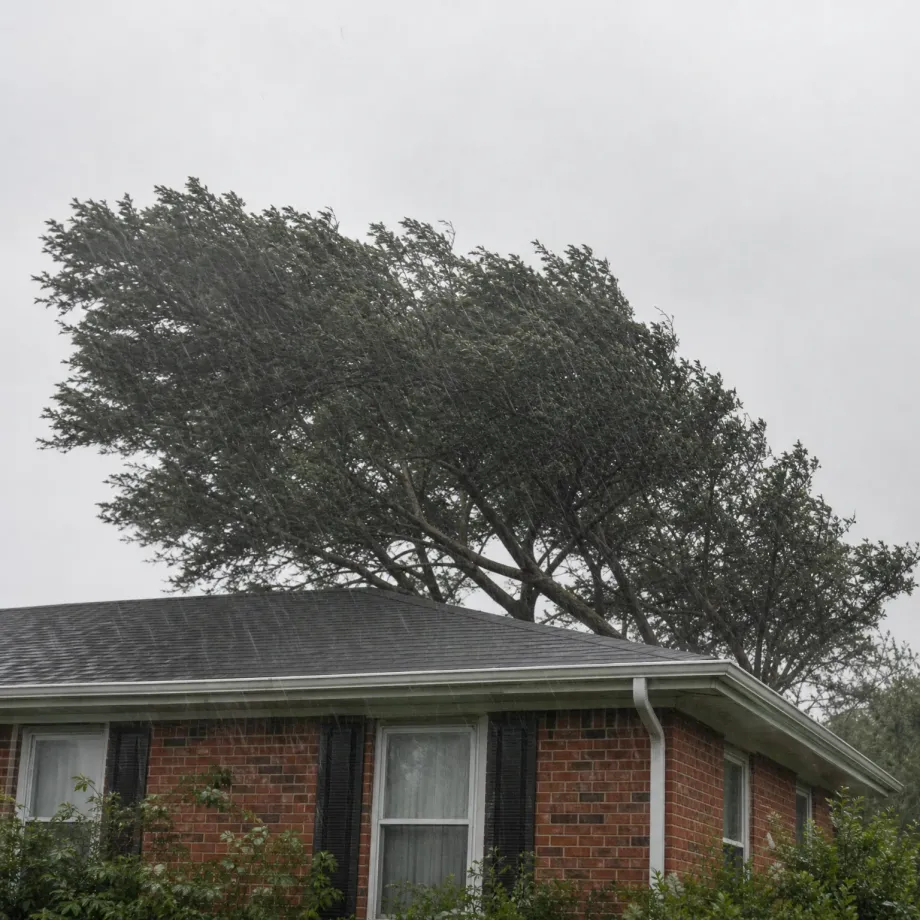
A contractor working a central AC repair in Cleveland County has to sort out how much of what they find is age and how much is load. 117 severe weather events were recorded in Cleveland County, North Carolina between 2015 and 2024. At that rate, severe weather is a standing condition for equipment here, not an occasional setback, and compressors, capacitors, and contactor points carry that history in ways that show up before a system outright quits. A part that looks like a routine wear failure in a quieter area often tells a different story here, and a good diagnosis accounts for that before any quote gets written.
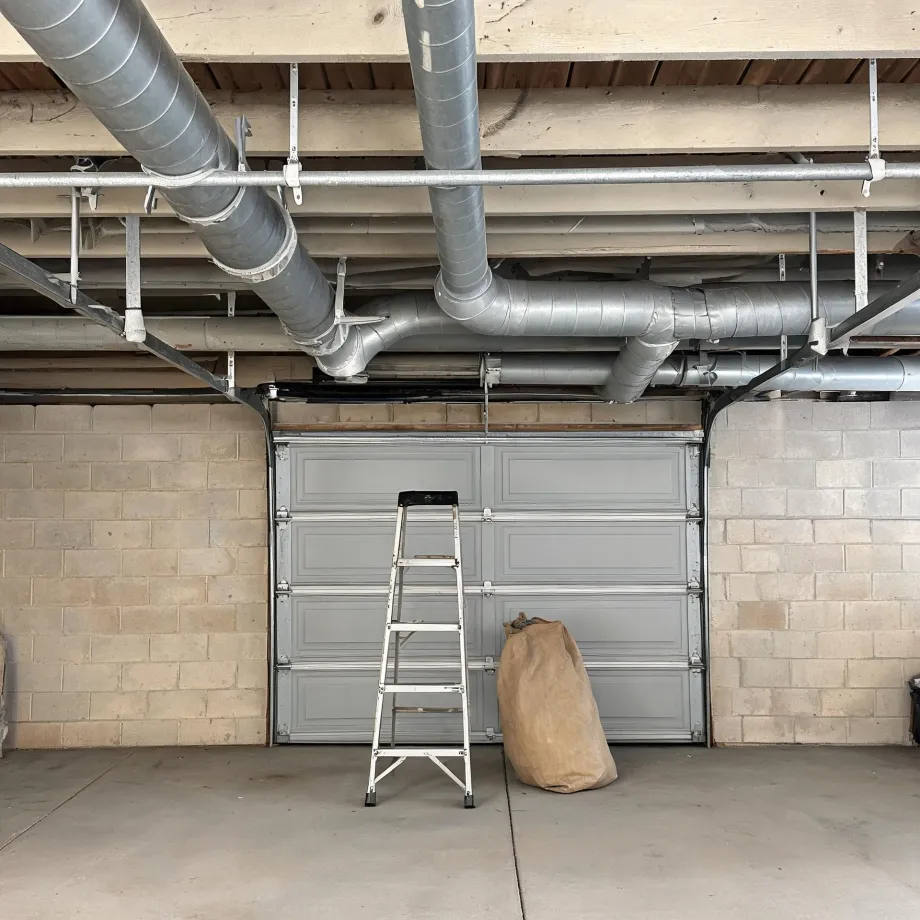
Ductwork that has been patched across different equipment generations tells you something about what a contractor opens and what they find inside it. Half the homes in Cleveland County, North Carolina were built in 1979 or earlier (2020-2024 ACS 5-year). A system that has been running since that era of housing construction draws on a parts supply that gets thinner every year. When a compressor or control board fails in a unit that old, the question a contractor has to answer is whether a replacement part exists at all, and that answer can redirect a repair toward a full replacement faster than the diagnosis itself.
The Parts of a Central AC a Contractor Checks During a Repair
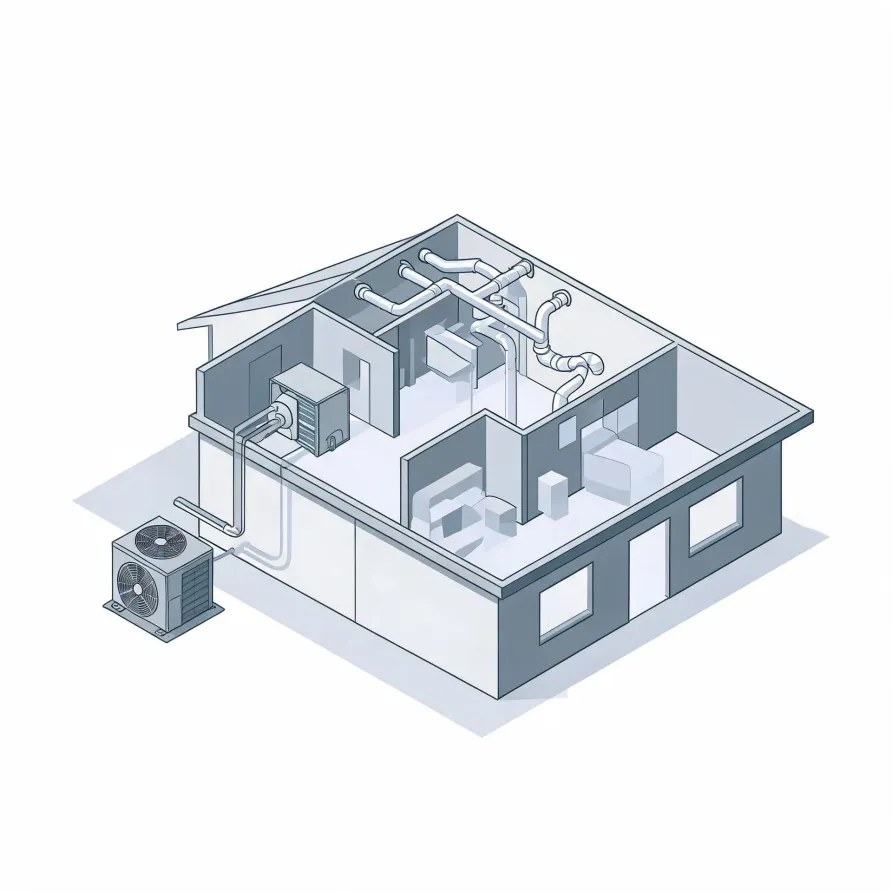
The outdoor condenser unit sits outside the house, usually on a concrete pad beside the foundation, and it holds the compressor and condenser coil. These are where most repairs start. A failing compressor may run constantly without cooling the house, while a damaged condenser coil or a failed capacitor will stop the unit from operating at all.
Inside the house, the air handler or furnace cabinet holds the evaporator coil and the blower fan. The evaporator coil is a common source of refrigerant leaks and ice buildup. The blower moves conditioned air into the duct system, and a worn motor or a failed relay there can cut airflow to the whole house. The refrigerant lines and the thermostat tie both sides together, and a contractor checks each one when the fault is not obvious at first glance.
The drawing shows the general layout of a central AC system, and a licensed contractor determines what applies to the specific equipment and configuration in your house.
Find a contractor in Cleveland CountyCleveland County, NC, by the numbers
117 severe weather events were recorded in Cleveland County, North Carolina between 2015 and 2024.
NOAA National Centers for Environmental Information, Storm Events Database, bulk CSV export, events 2015-01-01 through 2024-12-31.Half the homes in Cleveland County, North Carolina were built in 1979 or earlier (2020-2024 ACS 5-year).
U.S. Census Bureau, 2020-2024 American Community Survey 5-Year EstimatesCleveland County, North Carolina holds 44,304 housing units (2020-2024 ACS 5-year).
U.S. Census Bureau, 2020-2024 American Community Survey 5-Year EstimatesOwners occupy 70.9% of the occupied homes in Cleveland County, North Carolina (2020-2024 ACS 5-year).
U.S. Census Bureau, 2020-2024 American Community Survey 5-Year EstimatesRules & Standards Governing Central AC Repair in Cleveland County, North Carolina10 sourced rules and standards
What Happens When the Contractor Shows Up
Split-system central air conditioners rated below 45,000 Btu/h manufactured on or after January 1, 2023 must meet a federal minimum of 13.4 SEER2.
Split-system central air conditioners rated at or above 45,000 Btu/h manufactured on or after January 1, 2023 must meet a federal minimum of 13.4 SEER2.
Split-system central air conditioners manufactured between January 1, 2015 and December 31, 2022 had to meet 13 SEER, the metric that preceded SEER2.
Single-package central air conditioners manufactured on or after January 1, 2023 must meet a federal minimum of 13.4 SEER2.
Space-constrained central air conditioners manufactured on or after January 1, 2023 must meet a federal minimum of 11.7 SEER2.
Federal efficiency standards for split-system central air conditioners and heat pumps are set on each certified combination of outdoor unit and indoor coil rather than on the outdoor unit alone.
Residential and light commercial air conditioning and heat pump systems assembled in the field, including mini-splits and unitary systems, may not be installed on or after January 1, 2025 using a refrigerant with a global warming potential above 700.
A field-assembled system whose specified components were all manufactured or imported before January 1, 2025 carries no installation compliance date under the refrigerant restrictions and may still be installed.
Licensing Rules for HVAC Repair in Cleveland County, North Carolina
North Carolina issues Class I heating licenses covering all systems in all structures, and Class II licenses covering heating systems in single-family detached residential dwellings.
North Carolina requires a license before any person or firm may engage in, or offer to engage in, the business of heating contracting.
Severe Weather Events in Cleveland County
Storm activity puts real strain on cooling equipment. Heat, humidity swings, and power disruptions that follow severe weather all add wear to the components an AC system depends on, and that wear shows up as repair calls.
117 severe weather events, 2015–2024. Source: NOAA National Centers for Environmental Information, Storm Events Database.