Tell us about the job
Takes about a minute. No obligation.
A compressor or condenser fan that fails here has been running against a county where severe weather is a standing feature, not an occasional one. 169 severe weather events were recorded in Davidson County, North Carolina between 2015 and 2024. That load accumulates in the parts that work hardest under strain: capacitors, contactors, and refrigerant lines that cycle hard every time conditions outside push the system past its normal range. A contractor quoting a repair in this area factors that history into what they open and check first, because a part that looks like it simply aged may have aged faster than the calendar suggests.
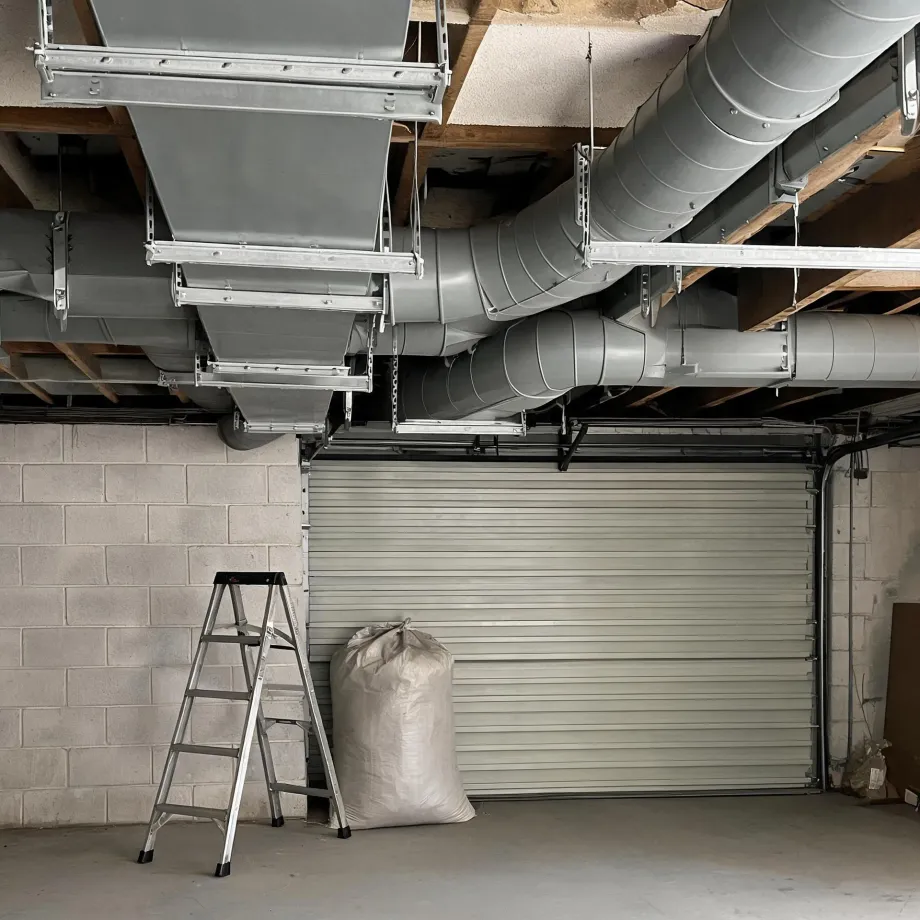
Older systems and older parts do not age at the same rate. Half the homes in Davidson County, North Carolina were built in 1985 or earlier (2020-2024 ACS 5-year). A unit that has been running in a house from that era draws on components that manufacturers have discontinued or redesigned, so a repair that starts as a straightforward swap can stall when a contractor finds that the exact part the system takes is no longer in production. In that situation, the contractor's call turns on whether an adapted replacement is rated for that system, and what fitting one will mean for the repair bill.
The Parts of a Central AC a Contractor Checks First
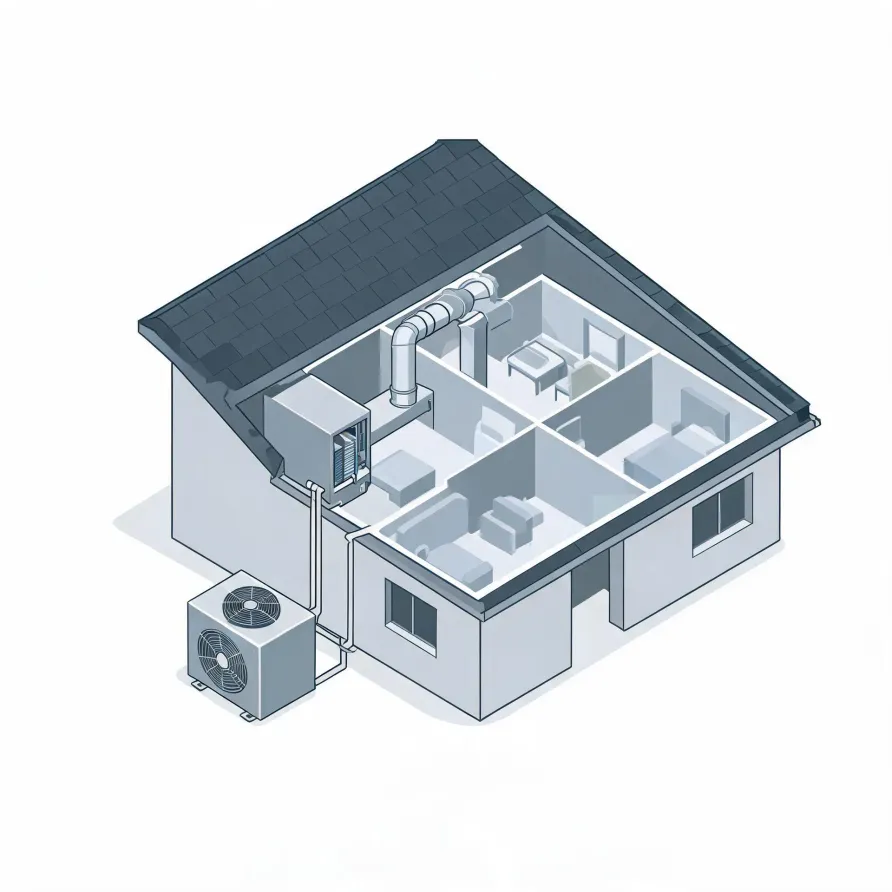
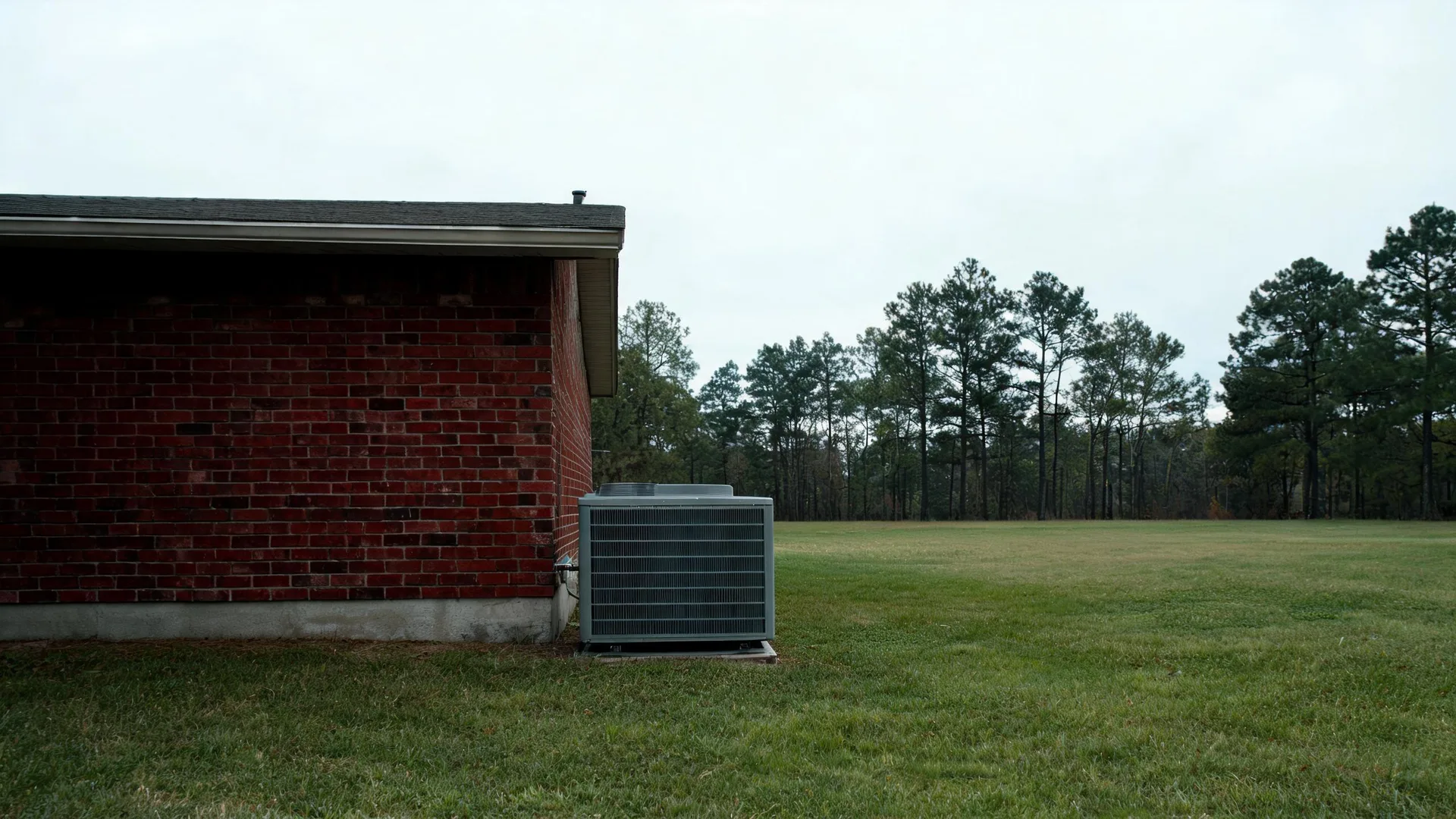
The outdoor condenser unit sits outside the house, usually on a concrete pad at ground level, and it carries the compressor and condenser coil. The compressor is the part contractors go to early when a system stops cooling, because a failed compressor is the reason a lot of calls get made. The condenser coil and its fan move heat out of the refrigerant and exhaust it into the outside air.
Inside the house, the air handler or furnace cabinet holds the evaporator coil and the blower. The evaporator coil pulls heat out of indoor air, and a refrigerant leak or a frozen coil shows up here. The blower pushes conditioned air through the ducts, and the expansion valve and refrigerant lines connect the indoor and outdoor sides of the system.
The drawing shows a typical central AC layout, and a licensed contractor determines what applies to the specific equipment and configuration in your home.
Find a contractor in Davidson CountyDavidson County, by the numbers
169 severe weather events were recorded in Davidson County, North Carolina between 2015 and 2024.
NOAA National Centers for Environmental Information, Storm Events Database, bulk CSV export, events 2015-01-01 through 2024-12-31.Half the homes in Davidson County, North Carolina were built in 1985 or earlier (2020-2024 ACS 5-year).
U.S. Census Bureau, 2020-2024 American Community Survey 5-Year EstimatesDavidson County, North Carolina holds 76,396 housing units (2020-2024 ACS 5-year).
U.S. Census Bureau, 2020-2024 American Community Survey 5-Year EstimatesOwners occupy 74.4% of the occupied homes in Davidson County, North Carolina (2020-2024 ACS 5-year).
U.S. Census Bureau, 2020-2024 American Community Survey 5-Year EstimatesRules and Standards Behind Central AC Repair in Davidson County, North Carolina10 sourced rules and standards
What AC Repair Looks Like in Davidson County
Split-system central air conditioners rated below 45,000 Btu/h manufactured on or after January 1, 2023 must meet a federal minimum of 13.4 SEER2.
Split-system central air conditioners rated at or above 45,000 Btu/h manufactured on or after January 1, 2023 must meet a federal minimum of 13.4 SEER2.
Split-system central air conditioners manufactured between January 1, 2015 and December 31, 2022 had to meet 13 SEER, the metric that preceded SEER2.
Single-package central air conditioners manufactured on or after January 1, 2023 must meet a federal minimum of 13.4 SEER2.
Space-constrained central air conditioners manufactured on or after January 1, 2023 must meet a federal minimum of 11.7 SEER2.
Federal efficiency standards for split-system central air conditioners and heat pumps are set on each certified combination of outdoor unit and indoor coil rather than on the outdoor unit alone.
Residential and light commercial air conditioning and heat pump systems assembled in the field, including mini-splits and unitary systems, may not be installed on or after January 1, 2025 using a refrigerant with a global warming potential above 700.
A field-assembled system whose specified components were all manufactured or imported before January 1, 2025 carries no installation compliance date under the refrigerant restrictions and may still be installed.
Licensing Rules That Apply in Davidson County, North Carolina
North Carolina issues Class I heating licenses covering all systems in all structures, and Class II licenses covering heating systems in single-family detached residential dwellings.
North Carolina requires a license before any person or firm may engage in, or offer to engage in, the business of heating contracting.
Severe Weather Events in Davidson County
Storms, heat, and hard humidity cycles put real load on AC equipment. How often that happens in Davidson County shapes how hard local systems work and how soon components wear.
169 severe weather events, 2015–2024. Source: NOAA National Centers for Environmental Information, Storm Events Database.