Central AC or mini split for a North Carolina home

A local installer who puts in air conditioners gets your project.

Find my pro

Both can cool a North Carolina home well, and the choice usually comes down to what you already have. If ductwork is in place and in decent shape, central air stays the simpler path, since it uses what's there and cools the whole house evenly through the humid months. A mini split earns its keep where ducts don't reach: a garage conversion, a sunroom, an addition, or a house that never had ducts to begin with. It also handles humidity room by room, which matters here from roughly May through September when the air outside stays heavy. Central air needs ducts that can carry the load; a mini split needs a spot on the wall and a line set run to the outdoor unit. Most homes here heat with electricity, and a mini split can do both jobs in the rooms it serves, which is worth weighing if you're replacing more than just the AC.

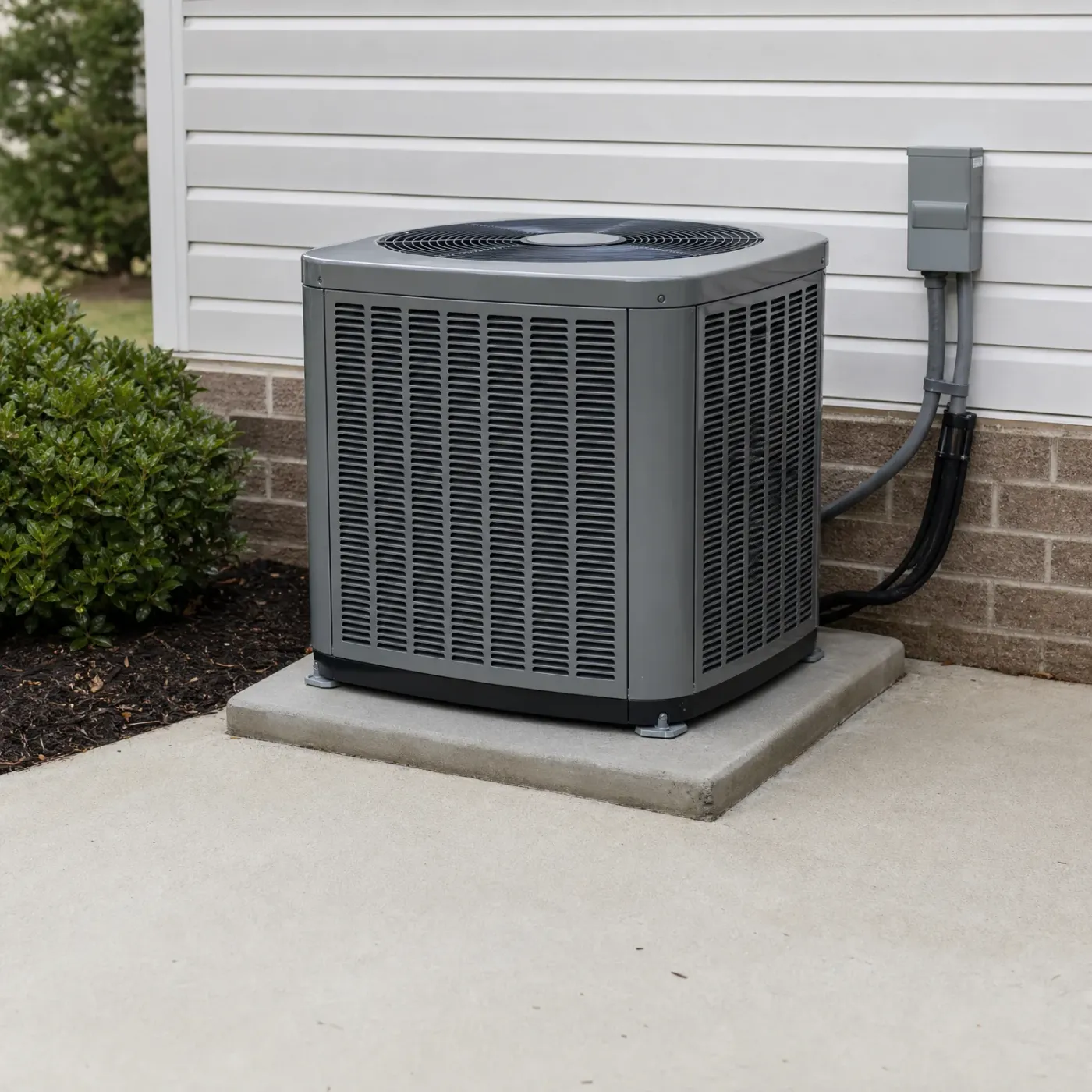
A gray outdoor air conditioner condenser unit on a concrete pad beside a house with white horizontal siding and a brick foundation, with a wall-mounted disconnect box and conduit, and a green shrub with mulch at left.

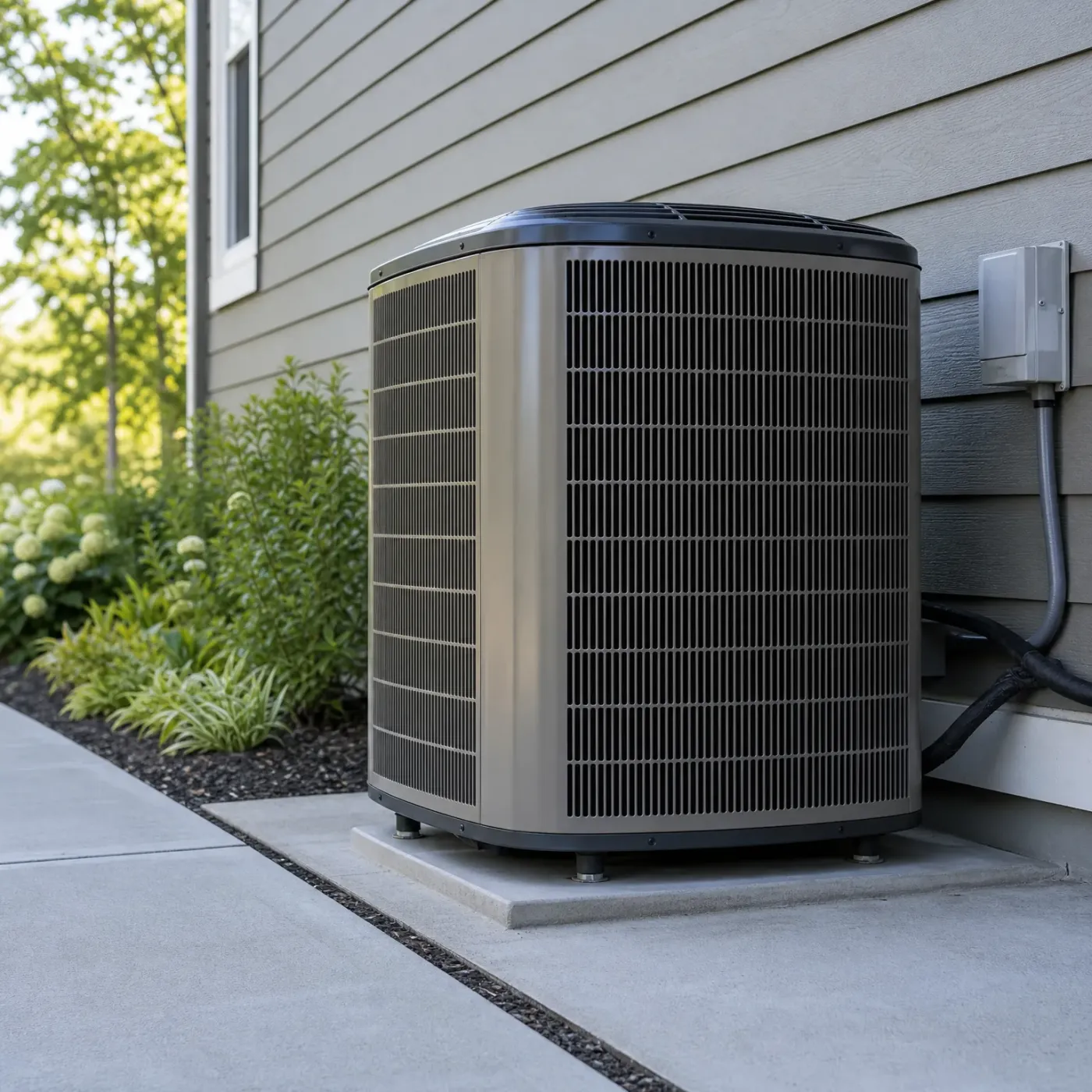
Ductwork, Doing Its Job

This is what a central system looks like when the ductwork behind it is in good shape. The line set and conduit run clean up the wall to the disconnect, and the condenser sits level on its pad. Nothing here is fighting the house.

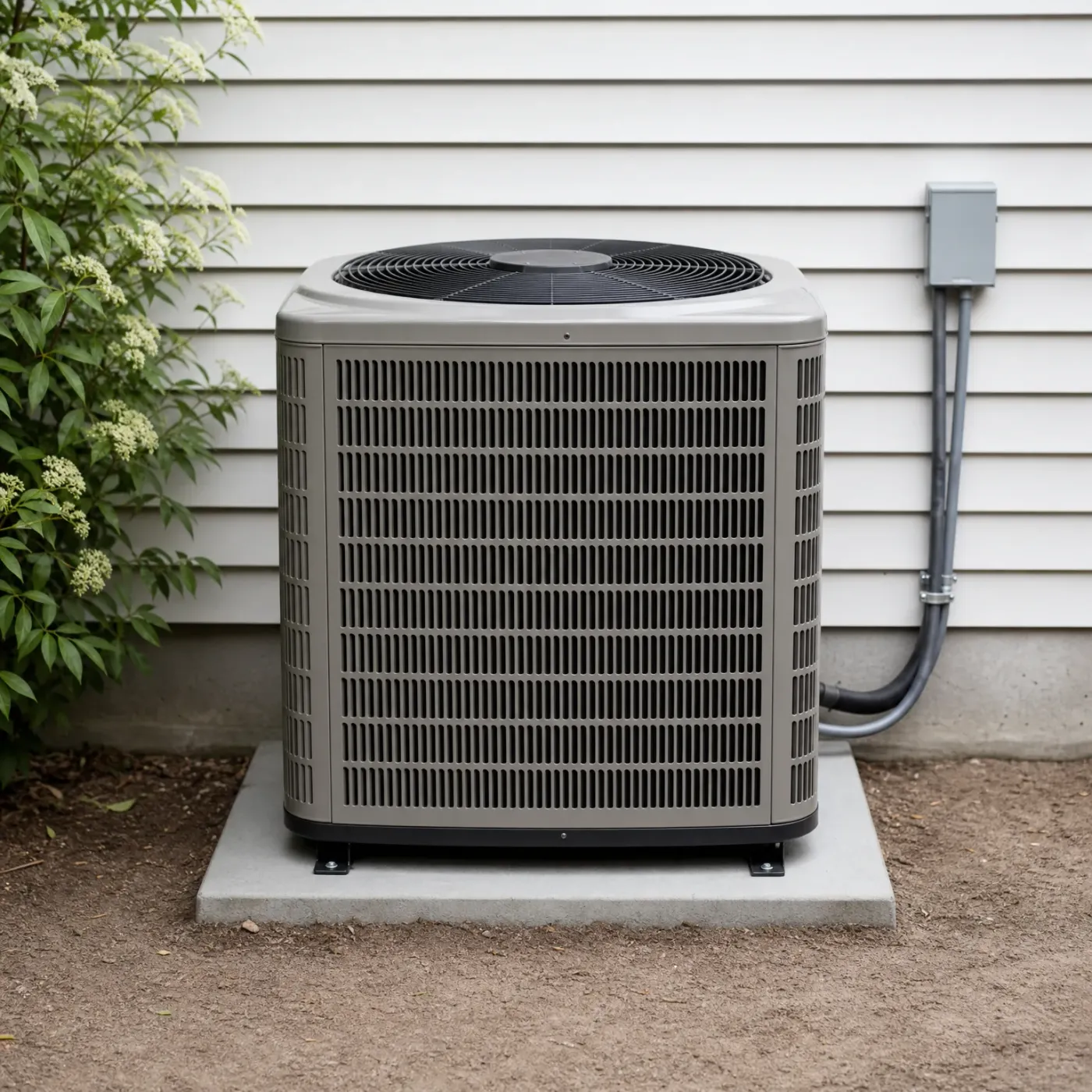
An outdoor air conditioning condenser unit on a concrete pad beside a house with white horizontal vinyl siding, with a gray electrical disconnect box and refrigerant lines on the wall behind it.

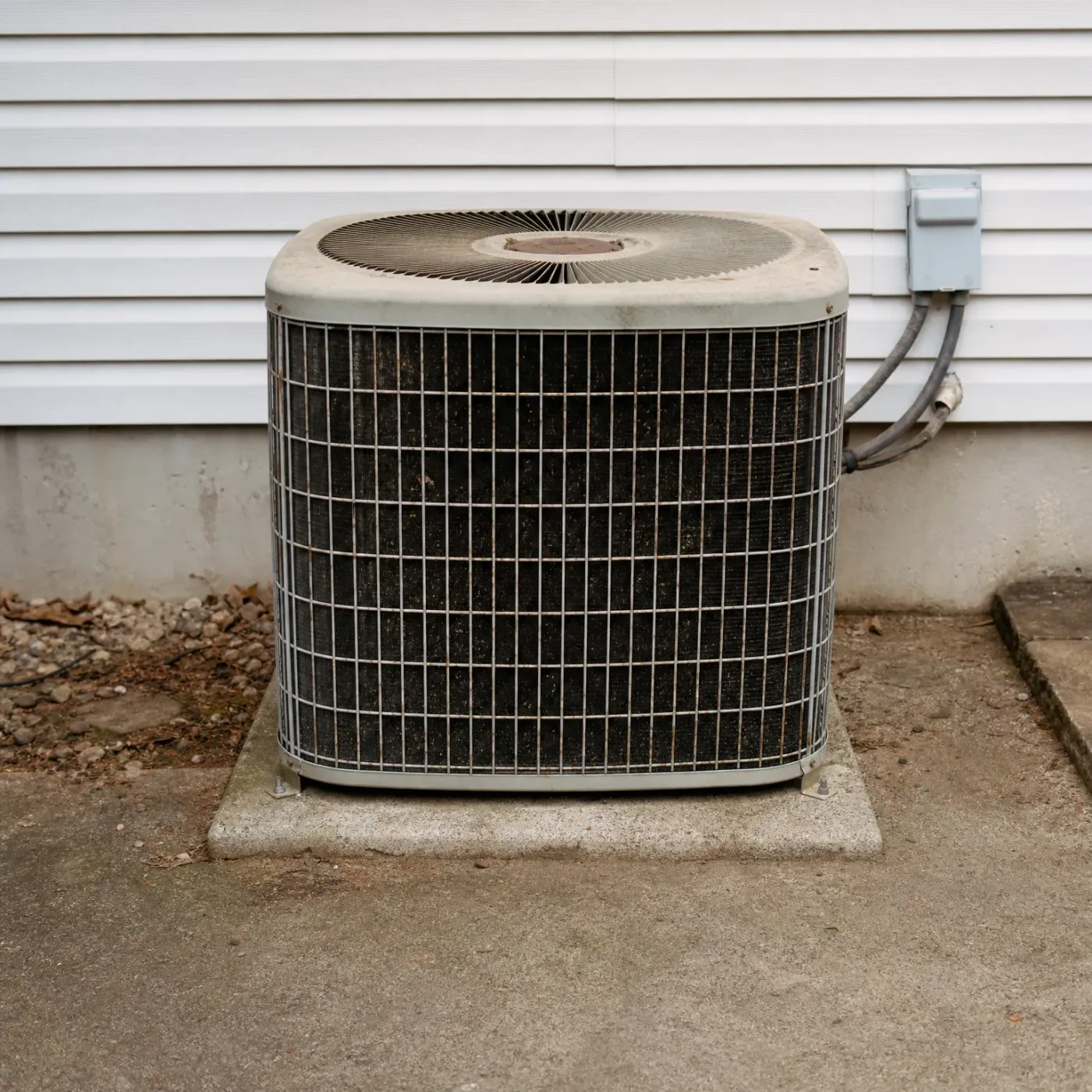
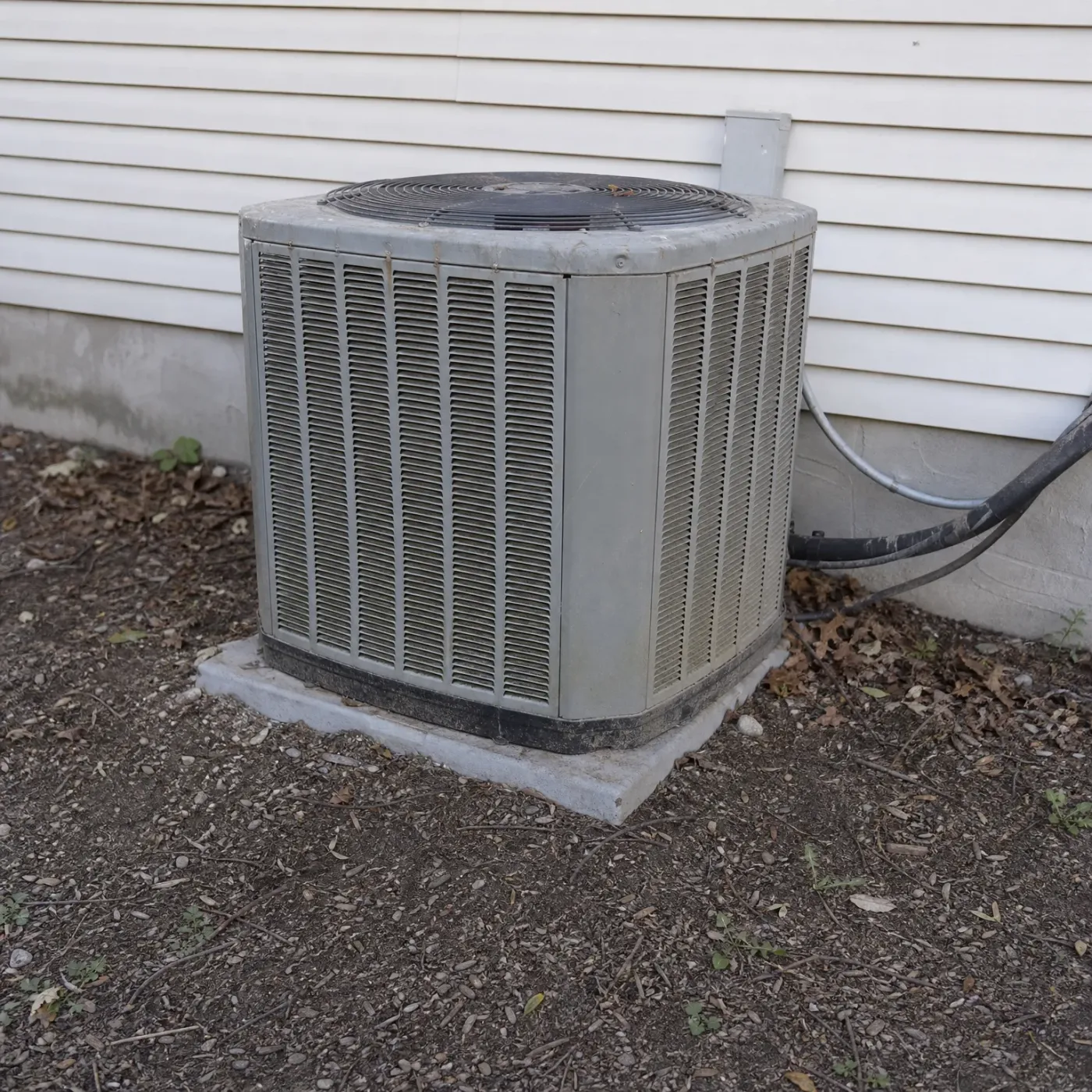
When Ductwork Is the Problem

Grime like this on the grille usually means the unit has been working harder than it should. If the ducts behind it are leaking or undersized, a mini split lets you cool a room directly without routing air through them at all.

Is your cooling actually keeping up this summer

Walk your house in August and check each room against the thermostat. A bedroom at the end of the hall that stays warmer than the rest, a sunroom or bonus room over the garage that never quite cools, a system that runs most of the afternoon and still can't hold the number you set it to. These are signs the house isn't cooling evenly, whether that's weak ductwork, a room the ducts never reached, or a unit working harder than it should. Left alone, the uneven rooms stay uncomfortable and the system logs more hours than it needs to, which shows up on your power bill. It also means more wear on a unit that's already straining.

A woman with long gray hair wrapped in a checked blanket sits on a sofa by a window with yellow autumn foliage outside, with a lamp, framed picture and plant in the background.
An older woman in a cream knit sweater sits on a sofa by a window, looking out at sunlit trees with yellow and orange autumn leaves, with a bookshelf and lamp behind her.
A woman with gray shoulder-length hair in a dark knit sweater sits on a cushioned seat by a window, looking out at yellow autumn foliage, with a living room, armchair, houseplant and framed picture behind her.
An older woman with gray hair in a bun, wearing a cream knit sweater, sits on a sofa with a gray blanket and looks out a large window toward yellow-green autumn trees, with a lit table lamp and dark armchair behind her.
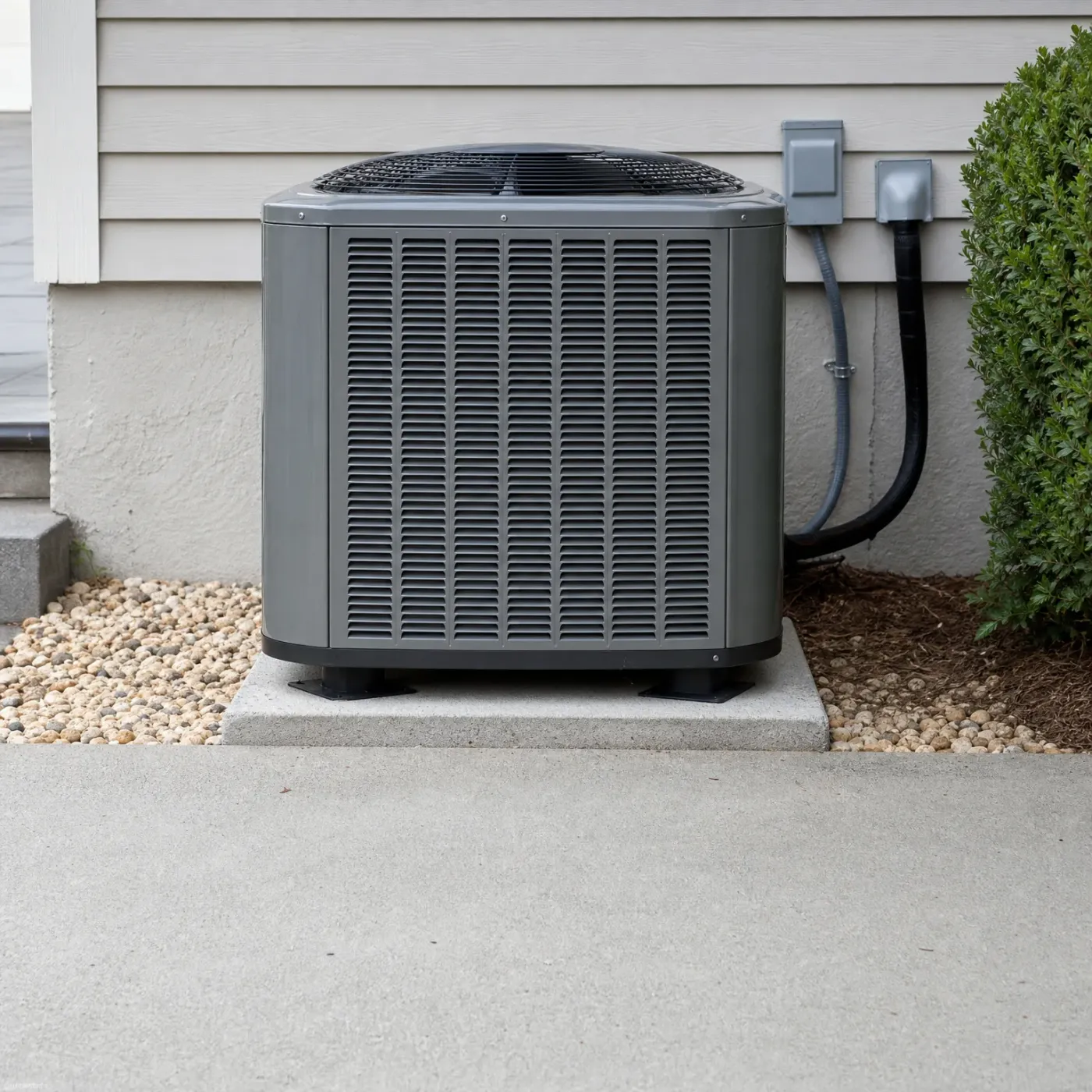
A gray outdoor air conditioner condenser unit on a concrete pad beside a house with horizontal siding and a stucco foundation, with a disconnect box and conduit on the wall, decorative gravel, mulch, and a shrub nearby.
A condenser kept clear of leaves and clippings, with open space around the cabinet, pulls air through the coil the way it was designed to.
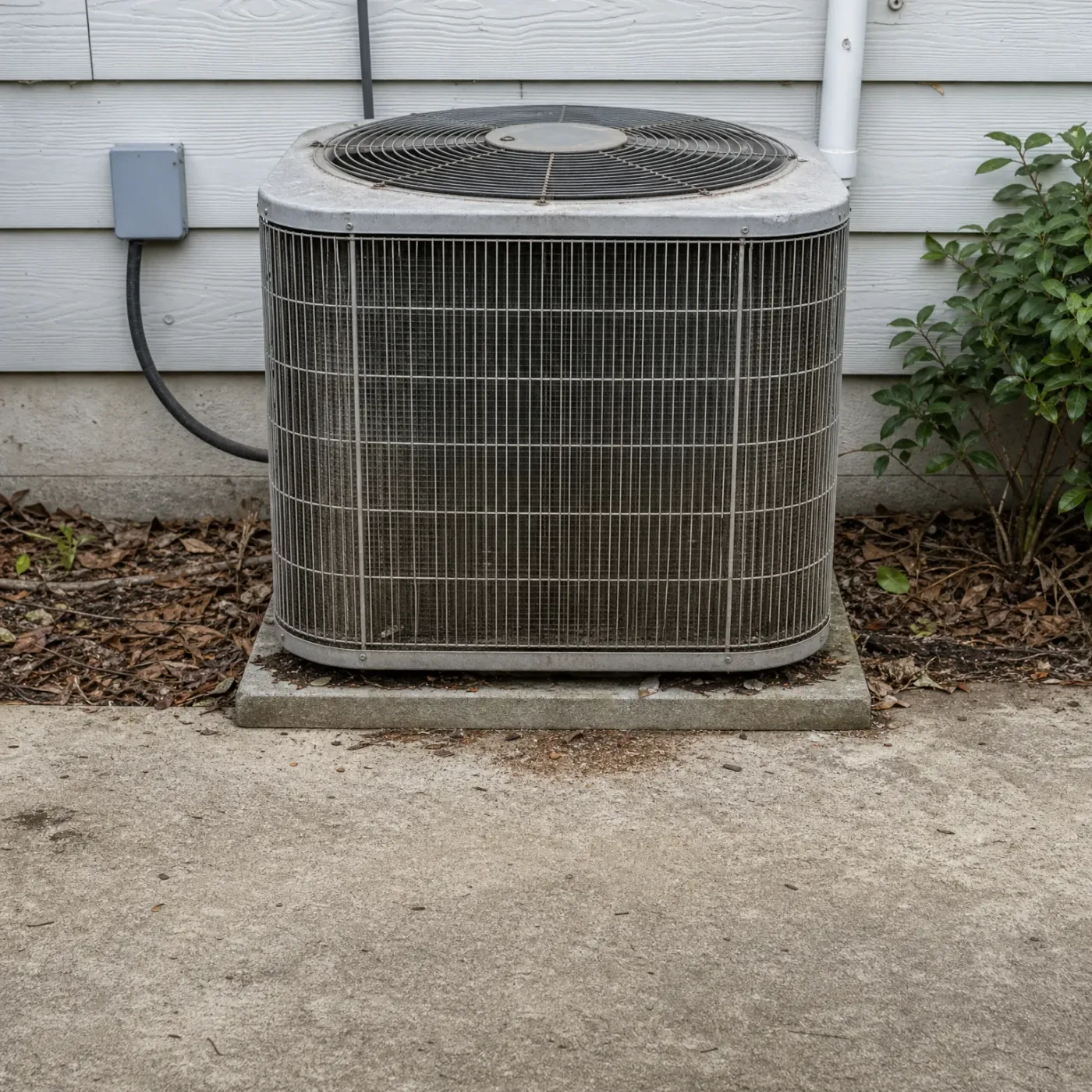
An outdoor air conditioning condenser unit on a concrete pad beside a house with horizontal lap siding, with an electrical disconnect box and conduit on the wall, mulch and a green shrub to the right, and a concrete walkway in the foreground.
Coils caked with dirt and debris make the system work harder to move the same heat, and that shows up on your summer bill.

Central air starts at one outdoor condenser. Refrigerant lines carry heat from inside the house out to that unit, and the air handler pushes the cooled air through your supply ducts to every room, pulling warm air back through the returns. The whole house runs off that one loop, so your ductwork has to be sized and sealed well for the air to reach the far bedroom the same as the living room. A mini split skips ducts entirely. Refrigerant runs through a line set to each indoor head, and each head cools only the room it's mounted in, with its own thermostat. That means a bonus room over the garage can run as cold as you want without touching the rest of the house. It also means a hole through the exterior wall for every head, and a spot outside for the condenser. One mini split condenser can run several indoor heads at once, the same way one central condenser serves the whole duct system.

How Each System Actually Moves Air

  • Central air moves heat through refrigerant lines to one outdoor condenser, then pushes cooled air through your existing ducts.
  • A mini split has no ducts at all; refrigerant runs through a small line set to each indoor head mounted on a wall or ceiling.
  • Each indoor head on a mini split has its own thermostat, so a bonus room over the garage can run colder than the rest of the house.
  • Central air depends on supply and return ducts being sized and sealed right, since that's how it gets air to every room.
  • A mini split needs a hole through the exterior wall for each indoor head, plus a spot outside for its condenser.
  • Central systems use one condenser for the whole house, while a mini split can run several indoor heads off one outdoor unit.
A woman in a cream knit sweater sits in an armchair with her eyes closed and a slight smile, beside an open window showing orange autumn foliage, with a mug, books and a lit candle on a small side table.
An older man with gray hair and a beard leans back on a beige sofa with his eyes closed, in a sunlit room with potted plants, a wicker chair and large windows behind him.
An outdoor air conditioning condenser unit on a concrete pad beside a house with horizontal lap siding, with a gray electrical disconnect box and conduit on the wall and green shrubs and trees to the left.

Matched to your air conditioner job

Skip collecting and comparing quotes for the new air conditioner.

Get in touch with a local installer about a new air conditioner.

Get an air conditioner pro

No charge to send it. You decide if you hire them.

How many mini split heads does a whole house actually need

You are picturing a mini split system replacing central air throughout the house, and the number that comes to mind is one head per room. That adds up fast on paper, and it makes the whole project look more expensive and more complicated than it has to be, so you want to know what a system actually needs before you rule it out or plan around the wrong number.

Usually one head per zone, not one per room

A mini split head covers a zone, and a zone can take in more than one room if they're open to each other or close in size and sun exposure. A single head often handles a living room and open kitchen together. A small house might run on two or three heads: one for the main living space, one for each separate sleeping area. A bedroom wing with doors that stay shut usually gets its own head so it holds its own temperature apart from the rest of the house. Bonus rooms over a garage, sunrooms, and additions that central air struggles to reach are often where one extra head does the most good, rather than adding one to every room.

A dim bedroom with an unmade bed beside a window holding a box fan, with sheer curtains, a lamp at right and a large blank wall at left.

You've had the box fan running in the window since dinner, and it hasn't helped much. It's past eight and still bright out, that long June evening light. The upstairs bedroom holds the heat from the whole day, and the air coming through the screen is as thick as the air already in the room. You can hear the fan pulling at the window frame, and somewhere downstairs the AC is running, but whatever cold air it's making isn't finding its way up here. You lie on top of the sheets instead of under them. The humidity makes the room feel a few degrees hotter than the number would say. You think about the thermostat downstairs reading fine while this room tells a different story.


Power costs 14.00 cents per kilowatt-hour statewide

At 14 cents a kilowatt-hour, running your AC through a muggy Carolina summer adds up fastest when the system has to work harder than it should. A mini split that only cools the rooms you use can hold that bill down more than central air running the whole house to reach one hot bedroom.

EIA-861 2025 statewide residential average

A gray outdoor air conditioner condenser unit on a concrete pad beside a house with horizontal lap siding, with a flowering shrub at left and a disconnect box with conduit on the wall at right.

A System Running Clean

This is a condenser doing what it's built for. The pad is clear, the conduit runs straight to the disconnect, and nothing around the cabinet blocks airflow. A system set up and installed right tends to look exactly like this years in.

An outdoor air conditioner condenser unit on a concrete pad beside a house with light horizontal vinyl siding, surrounded by bare dirt, gravel and dry leaves, with refrigerant lines and conduit running along the wall.

A System Losing Ground

Leaves and dirt have built up around the base, and the cabinet shows real weathering. A unit in this shape is working harder to move the same heat, and it's worth asking whether it's still the right fit for your house or just old enough to replace.

A smiling man in a denim shirt and white t-shirt stands in an open dark doorway of a stucco house, facing a woman with long brown hair and a green jacket seen from behind in the foreground.

Either way, the choice is yours to make, not guess at

Central air and mini splits both cool a North Carolina home through the summer. What settles it is your ductwork, the rooms giving you trouble, and what you're willing to have installed. You've got the facts now to walk through your own house and see which one fits.

Getting an installer out to look at your house is the part that takes the time. That's the step you can hand off. Once you're matched with a contractor who installs the system you're after, they'll reach out to you directly, and you won't be the one calling around or repeating your situation to the next name on a list.

Interior corner of a room with a window and sheer curtain at left, a gray upholstered sofa with a cushion at right, and a round wooden table holding stacked books and a round vase with an olive branch.
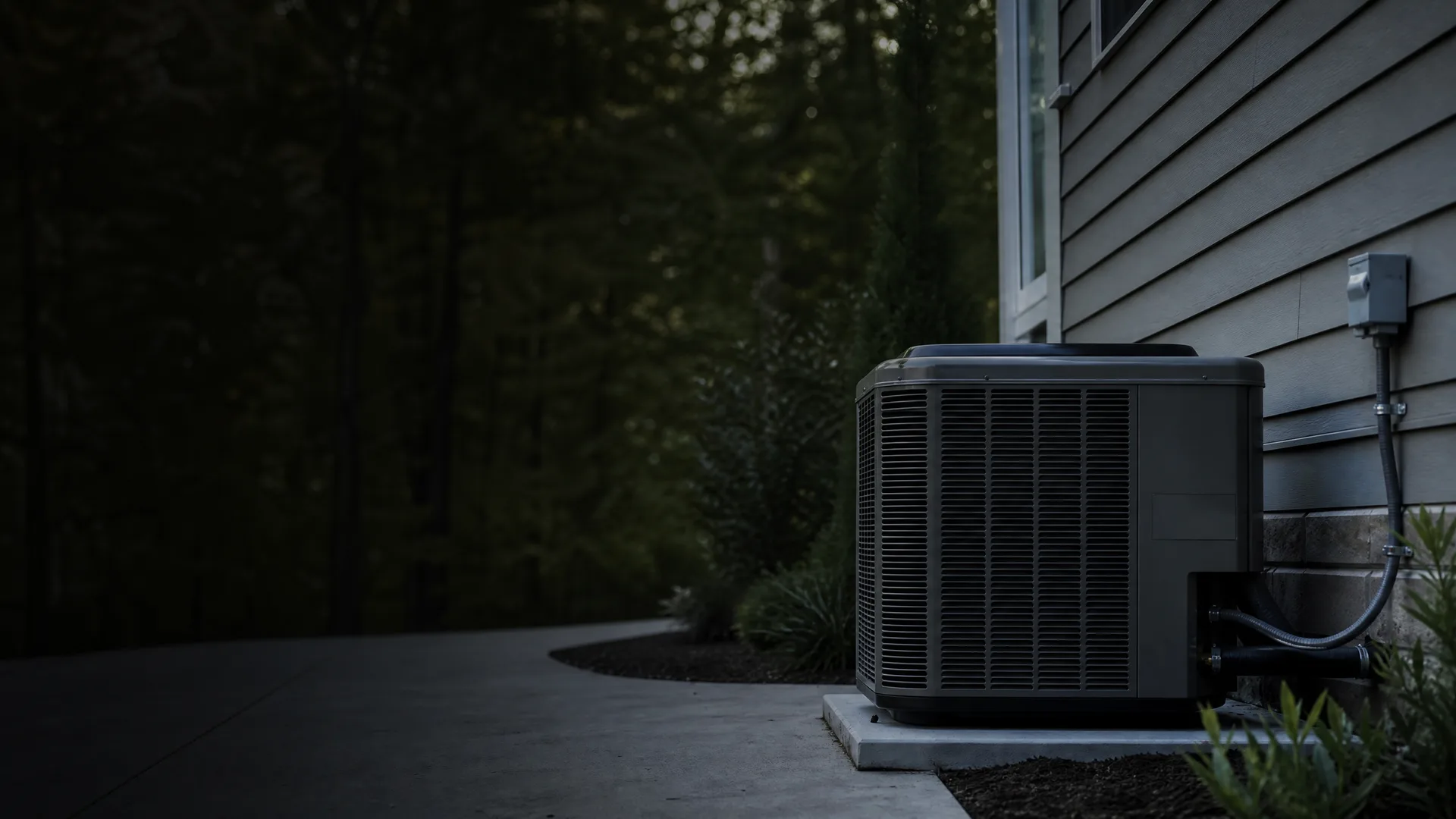
An outdoor air conditioner condenser unit sits on a concrete pad beside a house with horizontal lap siding, with a refrigerant line, electrical disconnect box, a concrete driveway and dark trees in the background.

An air conditioner pro near you

One form replaces the calls you'd make to find an air conditioner pro.

Step 1 of 3: Equipment