
North Carolina AC Cooling

How long an AC should run on a hot North Carolina day

Send the form, and lining up the air conditioner tune-up stops being yours to chase.

Hand it off

How long should my AC run on a hot day in North Carolina?

It's the middle of a hot, sticky North Carolina afternoon and your AC hasn't shut off in what feels like an hour. You're wondering if that's normal or if something's wrong. Most people notice this on the worst days of summer, when the unit seems to run nonstop and the house still doesn't feel as cool as it should.

On the hottest days, your AC can run for an hour or more at a time, and that's normal

A central air conditioner is sized to keep up with the heat, not to shut off every few minutes. On a hot, humid North Carolina afternoon, when it's pulling moisture out of the air along with the heat, it's normal for the unit to run for long stretches, sometimes close to nonstop, just to hold the house at a steady temperature. What matters more than how long it runs is whether the house actually reaches the temperature on the thermostat and whether the air coming out of the vents feels cold. If the system runs all afternoon and the house still doesn't cool down, that's the sign something's off, not the long runtime by itself.

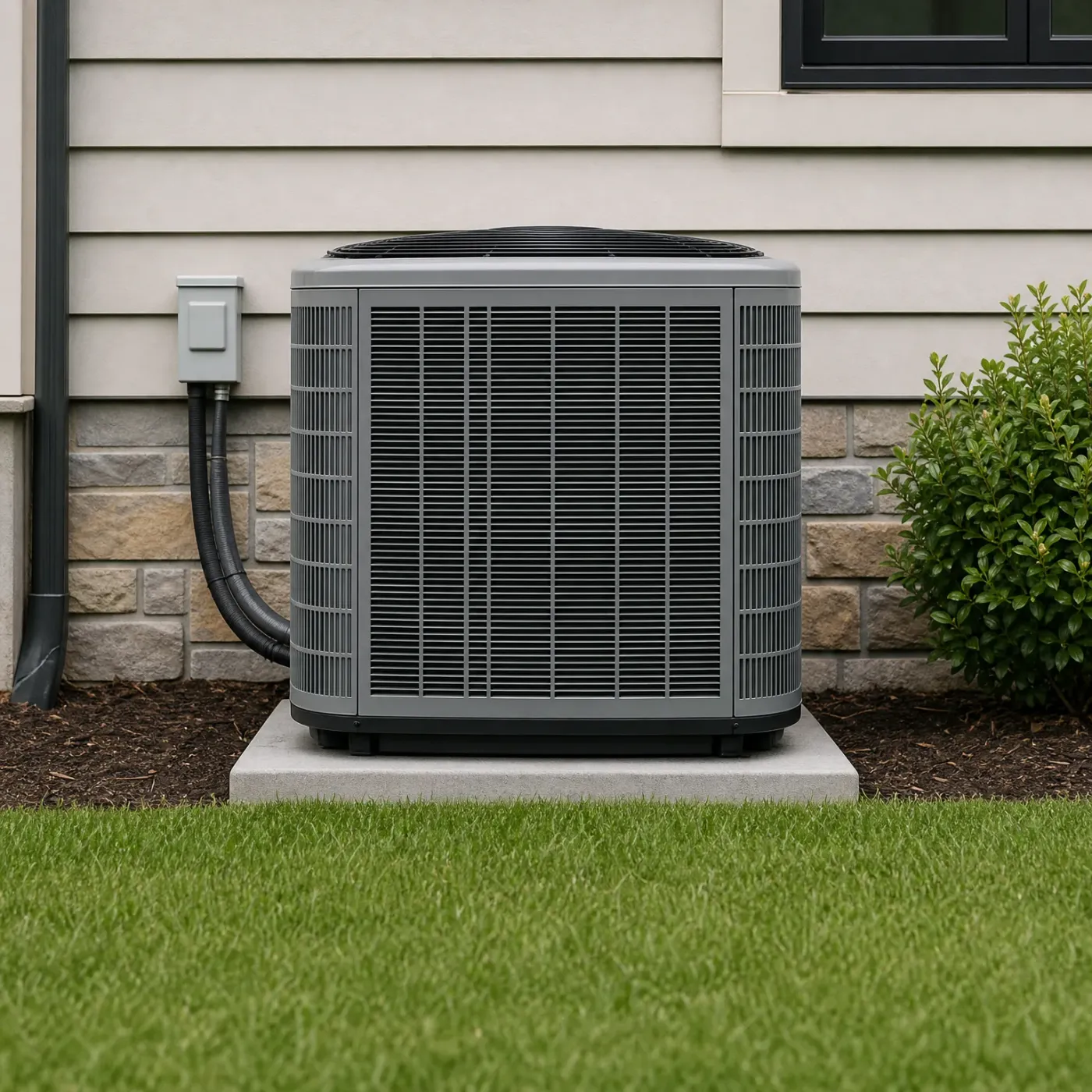
A gray outdoor air conditioning condenser unit on a concrete pad beside a house with horizontal lap siding and a stone veneer base, with a disconnect box and conduit on the wall, mulch bed and shrub to the right, and mowed grass in the foreground.

Running long, working fine

On a 95 degree day, your AC can run almost nonstop and still be healthy. It should be moving air hard at the vents and the house should be holding its temperature, not slowly losing ground. A clean, dusty-free unit outside is doing its job even when it rarely shuts off.
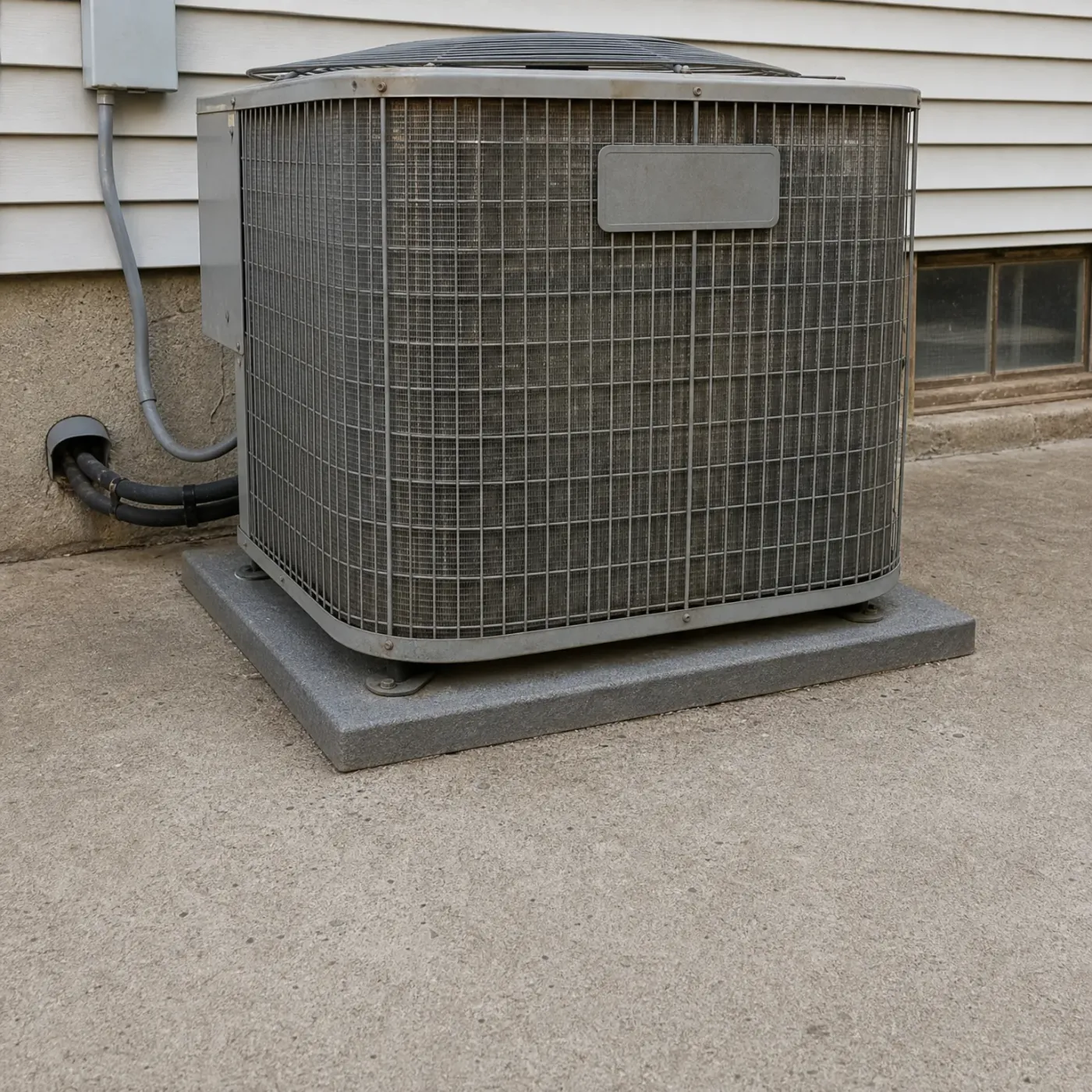
An outdoor air conditioner condenser unit on a gray composite pad beside a house with horizontal siding, a concrete foundation, a basement window, and a conduit and disconnect box on the wall.

Running long, struggling

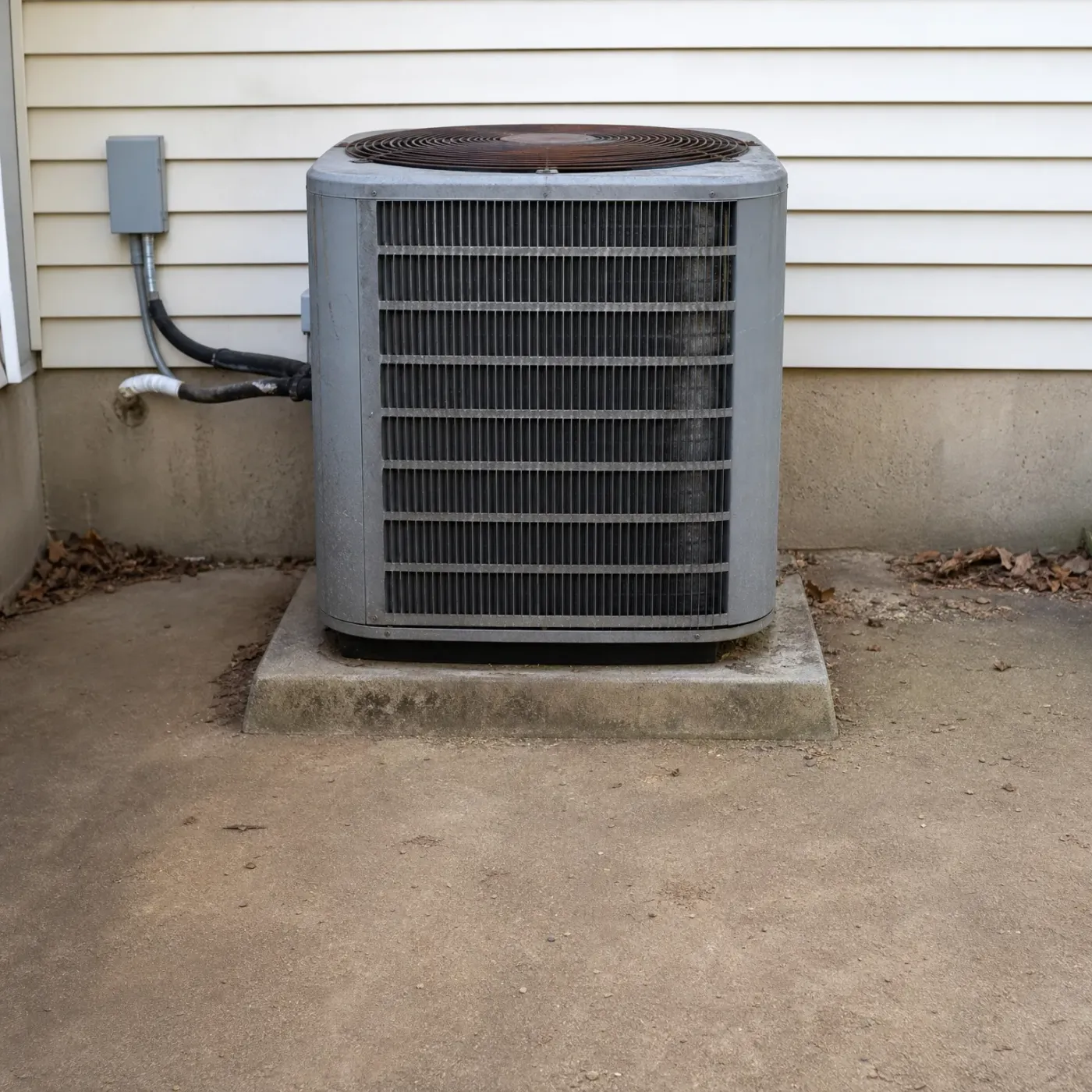
A unit caked in dirt and dust, like the one here, can't shed heat the way it needs to. It runs long because it's fighting to keep up, not because the day is hot. The house may still feel warm, and the system works harder for less result.

Is your AC running too long, or just keeping up?

Walk through your house on one of these afternoons and pay attention to what you feel, not just what you hear. Air should be moving hard and cold out of every vent, and the rooms farthest from the thermostat shouldn't feel noticeably warmer than the rest. If a bedroom down the hall is sticky while the living room feels fine, or if the air at the vents feels weak or barely cool, your system is working harder than it should to get nowhere. Left alone, that strain tends to show up later as a bigger repair, or a compressor that gives out a season or two earlier than it would have otherwise. A system that's merely loud and constant is usually fine. One that's losing the fight room by room usually isn't.

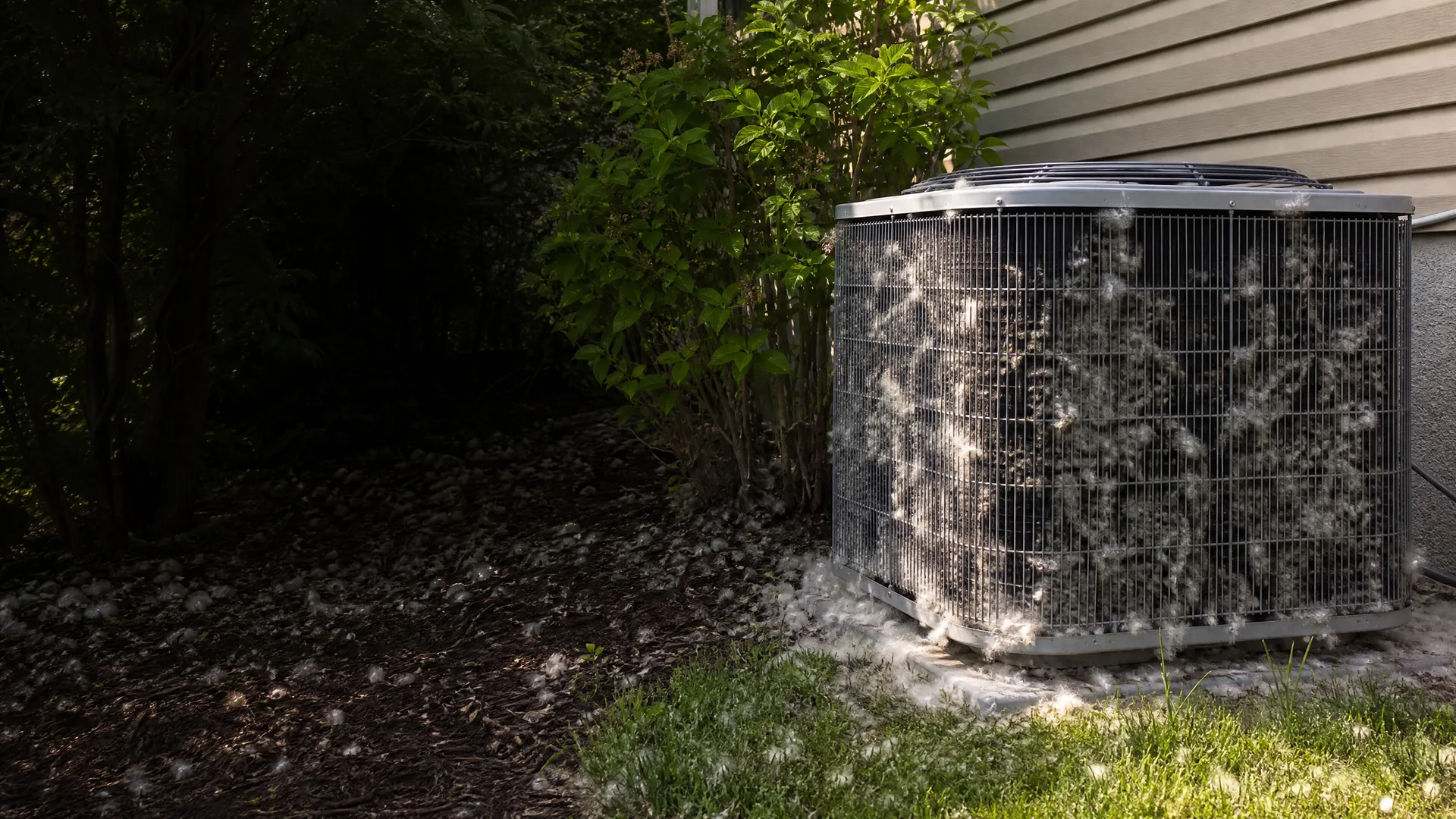
An outdoor air conditioner condenser unit beside a house with horizontal siding and stucco, its coil fins covered in white cottonwood fluff that also collects on the surrounding grass and mulch.

You're out pulling weeds along the side yard in late May, before the real heat sets in, and you notice the cottonwood seed has blown in thick this week. It's caught in the grass, drifted against the fence, and piled soft and white against the condenser fins. You run a finger over the coil and it doesn't give like it should. The unit's still running, still blowing cold at the vents, but it's working through that layer to do it. You make a note to get it looked at before July asks more of it than it can give.

Stop chasing an air conditioner pro

A unit that runs long on a 95 degree day isn't the problem. One that runs long and still can't hold 72 is telling you something is working harder than it should, and on a North Carolina summer that gap only gets wider through August. The parts that usually cause it, weak airflow, a dirty coil, a refrigerant charge that's drifted low, don't show up by looking at the thermostat. They show up when someone opens the cabinet and checks. A local contractor who services this equipment all summer has seen which of those tends to go first on units like yours, and what maintenance now saves you from a service call on the worst day of July. One contractor gets your request, so you're dealing with one person who knows your situation, not fielding calls from several. Send it in and that part of it is off your plate.

Why long runtimes don't wear it out

A compressor is built to run for hours at a stretch. It isn't like a car engine that benefits from rest. What shortens its life is starting and stopping over and over, not staying on. Every start pulls a hard jolt of current through the compressor windings, more than it draws once it's running steady. A unit that cycles on, cools the house down fast, shuts off, then kicks back on twenty minutes later is taking more wear from those restarts than one that just runs through a 95 degree afternoon without stopping.

What maintenance actually changes here

Maintenance doesn't make your AC run less on a hot day in North Carolina. It makes sure the hours it does run aren't wasted. A low refrigerant charge or a coil caked with a summer's worth of dust makes the system move less heat per hour, so it runs longer to get the same result, and some days it won't catch up at all. A tech checking charge, cleaning the coil and testing the capacitor before the real heat hits in July is keeping those long runtimes efficient instead of letting the unit grind against a problem it can't fix on its own.

A man in a blue sweatshirt reclines with closed eyes in a brown leather armchair in a living room with a bookshelf, houseplant, sofa, window, and a side table holding newspapers and a dark mug.
A bearded man in a gray pullover reclines with closed eyes on a brown leather sofa in a sunlit room with a window, framed picture, potted plant, and a wooden cabinet holding papers and a dark mug.
A man in a gray sweater leans back with closed eyes in a brown leather armchair beside a wooden side table holding a dark mug and a folded newspaper, with bookshelves and a window seat behind him.
A man in a green sweater reclines in an armchair with his eyes closed and a slight smile, beside a window with plants, a small table holding a mug and folded newspaper, and bookshelves behind him.

Running long into September

September afternoons in North Carolina still push into the 90s, and your AC will keep running long to match them. That's not the system failing to adjust. It's doing the same job it did in July, because the air outside hasn't let up yet. The rooms should still hold their temperature and the air at the vents should still feel strong. A unit that runs most of the afternoon in September, on a day that's still hot, is behaving the same way it did all summer, and that's worth knowing before you assume something changed.

Short cycles that mean trouble

A unit that shuts off after five or ten minutes, then kicks back on a few minutes later, is cycling short, and that's different from running long. Short cycling strains the compressor with repeated startups instead of one steady run, and it usually means the system isn't actually keeping up even though it looks like it's resting. A unit sized right for your house doesn't do this on a hot day. If yours is starting and stopping that often, that's the pattern to have looked at, not a long afternoon runtime.

A gray outdoor air conditioner condenser unit on a concrete pad beside a house with beige horizontal siding, with an electrical disconnect box and insulated refrigerant lines on the wall and dry leaves on the ground.
Before you get your air conditioner maintenance
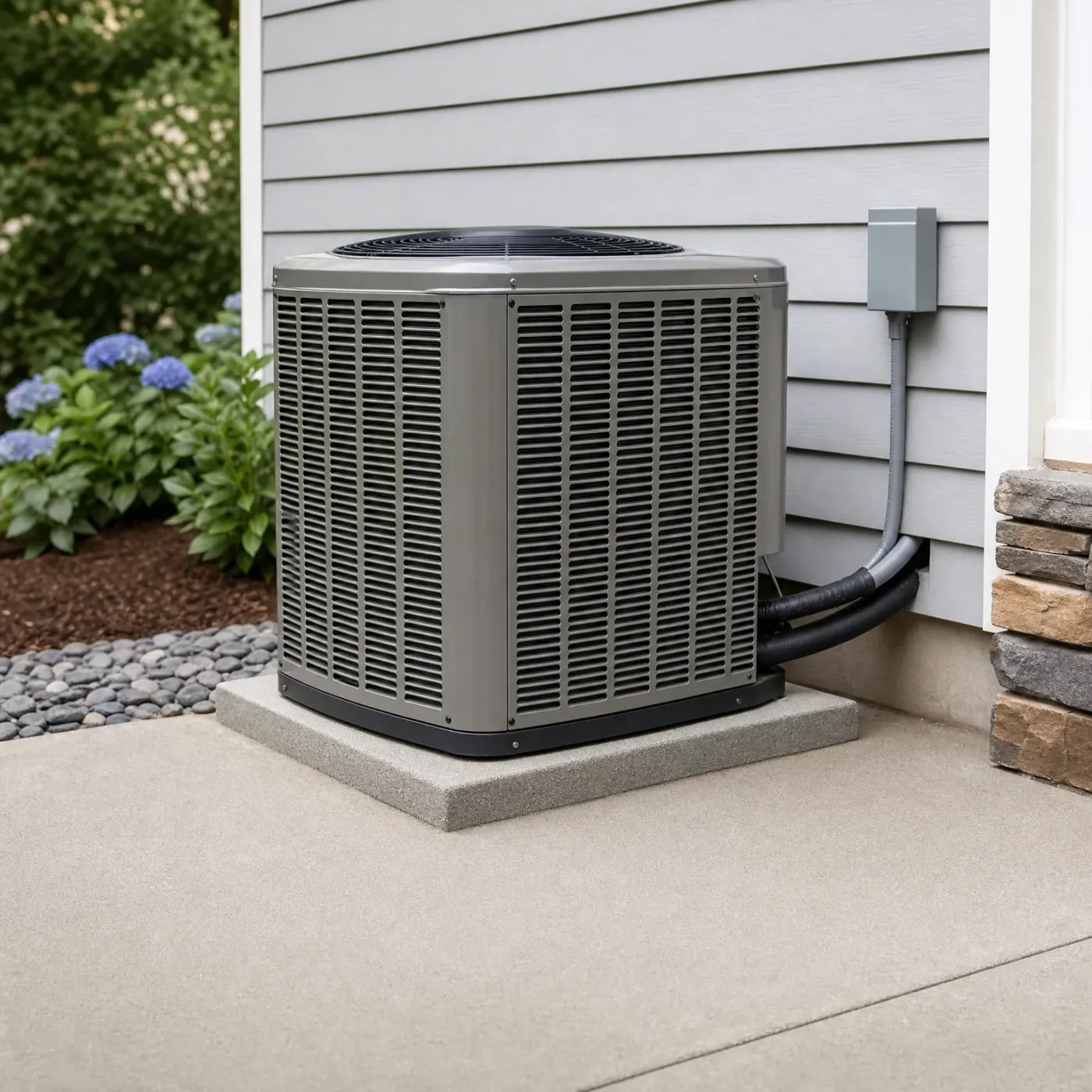
A gray outdoor air conditioning condenser unit on a concrete pad beside a house with horizontal gray siding, with a wall-mounted electrical disconnect box and insulated refrigerant lines, and blue hydrangeas in a mulched bed to the left.
After you get your air conditioner maintenance

Power costs 14.00 cents per kilowatt-hour statewide

At 14 cents a kilowatt-hour, every extra hour your AC runs on a 95 degree day shows up on the bill, even though that long runtime is normal. A unit that's clean and charged will hold your temperature using less power than one straining with a dirty coil or low refrigerant, so the running time costs you less either way.

EIA-861 2025 statewide residential average

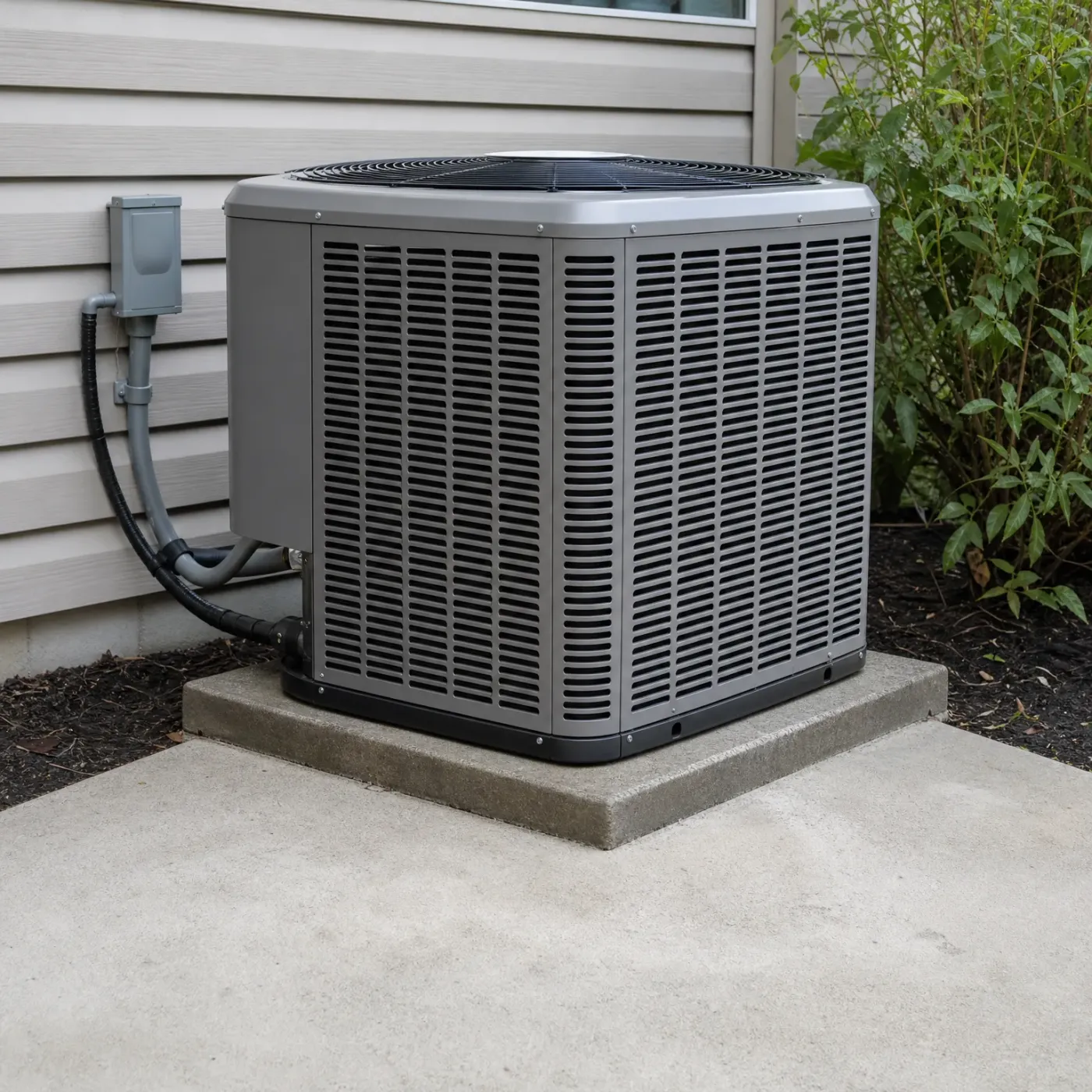
A gray outdoor air conditioner condenser unit on a concrete pad beside a house with light vinyl siding, with an electrical disconnect box and conduit on the wall and a leafy shrub with dark mulch to the right.
A clean condenser like this one can move heat out of your house all afternoon without trouble, even running close to nonstop.
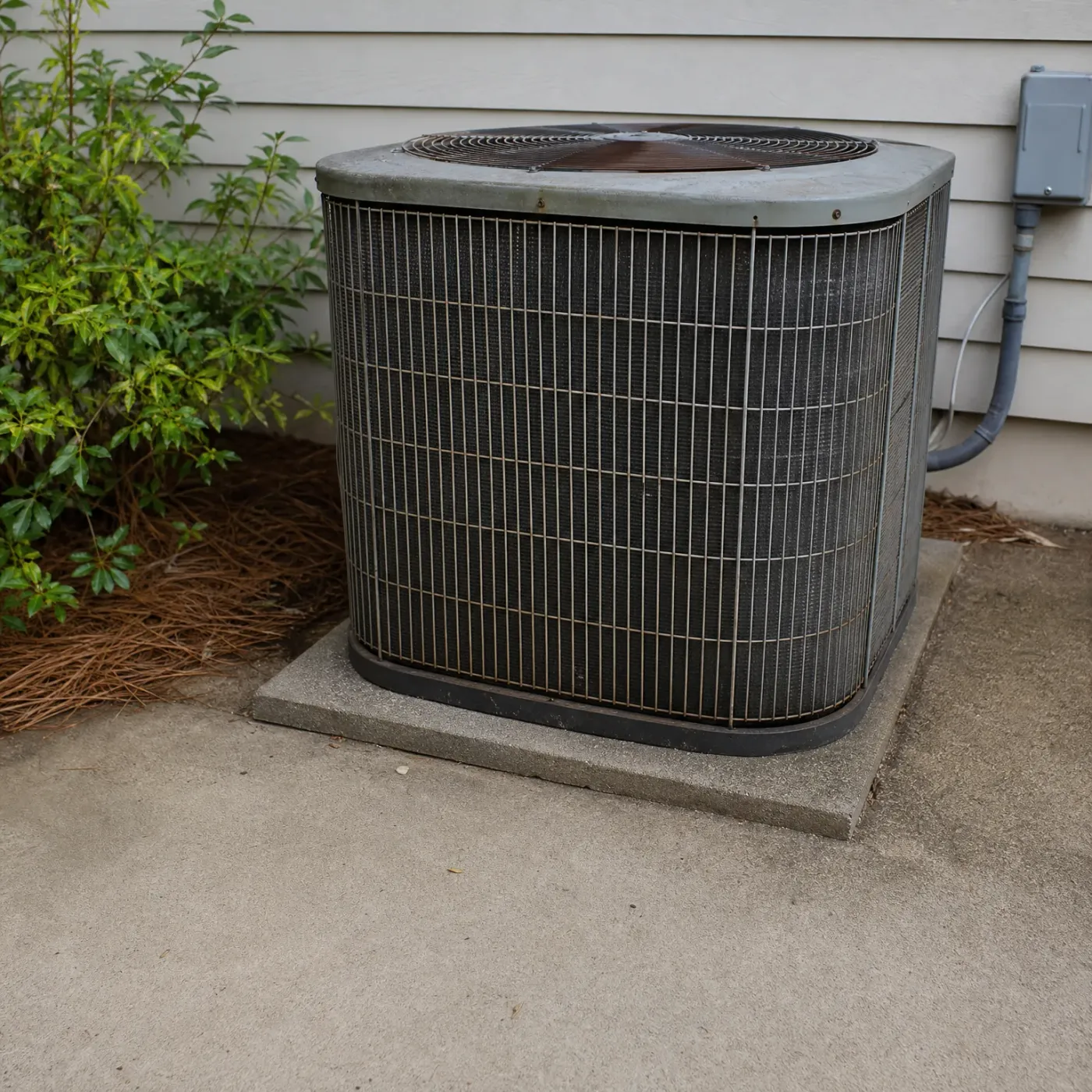
An outdoor air conditioner condenser unit on a concrete pad beside a house with horizontal lap siding, with a gray electrical disconnect box and conduit on the wall and a green shrub over pine-needle mulch at left.
A grille caked with dirt and pine needles makes the unit work harder to push the same heat out, and your runtime shows it.

A long runtime on a hot North Carolina afternoon isn't a sign of trouble. It's your AC doing the job it was built for, moving heat out of your house as fast as it comes in. What matters isn't how long it runs, it's whether the house stays cool while it does. If the air is cold at the vents and the rooms hold their temperature, the system is working the way it should, even running close to nonstop. If it's running that long and still losing ground, something inside it, a dirty coil, a weak capacitor, low refrigerant, is making it work harder than it needs to. A tune-up before the next heat wave catches that early, while it's still a small fix, and a local contractor who services this equipment every summer knows what to check first. You don't have to guess which one you're dealing with on your own.

A gray-haired man with a beard in a blue button-placket shirt reclines on a couch with his eyes closed, beside a sunlit window with a green plant.
A woman in a cream knit sweater sits in an armchair with her eyes closed near a window showing yellow autumn foliage, with a mug on a round wooden side table beside her.

Air Conditioner Maintenance

Send one request and you're done looking

Your request stays with one local pro.

A black-framed smartphone standing upright against a plain white background, its screen filled with solid green.
Step 1 of 3: Equipment