Dirty coils cost you
A coil caked with dust can't shed heat the way it should. The system runs longer to cool the same house, and the strain adds up over a muggy summer.

Getting your AC ready for summer means having it serviced before the heat sets in, usually in March or April before North Carolina humidity builds. A technician cleans the coils, checks the refrigerant charge, and tests the capacitor and other electrical parts that wear down over time. A dirty outdoor coil or a weak capacitor makes the system work harder to pull moisture and heat out of the air, and once the sticky months hit, that strain is what leads to a breakdown on the hottest day of the year. Catching a worn part in spring means fixing it on your schedule instead of waiting for an emergency call when every other AC in the neighborhood is failing too. The system also runs more efficiently when it's clean and properly charged, which matters over months of steady use. Checking it now, while the weather is still mild, is simpler than diagnosing a system that's already struggling to keep up.




A coil caked with dust can't shed heat the way it should. The system runs longer to cool the same house, and the strain adds up over a muggy summer.
A system low on charge struggles to pull humidity out of the air. Checking the charge before the heat sets in catches that before it turns into a weak, clammy house.

Put off the tune-up and you find out what's wrong on the day you need the system most, usually a July afternoon when every other phone in the county is also calling for a technician. A capacitor that was weak in April fails outright in August heat. Refrigerant that was a little low in spring runs the compressor harder for months, and that wear doesn't reverse itself once the weather finally breaks in October.
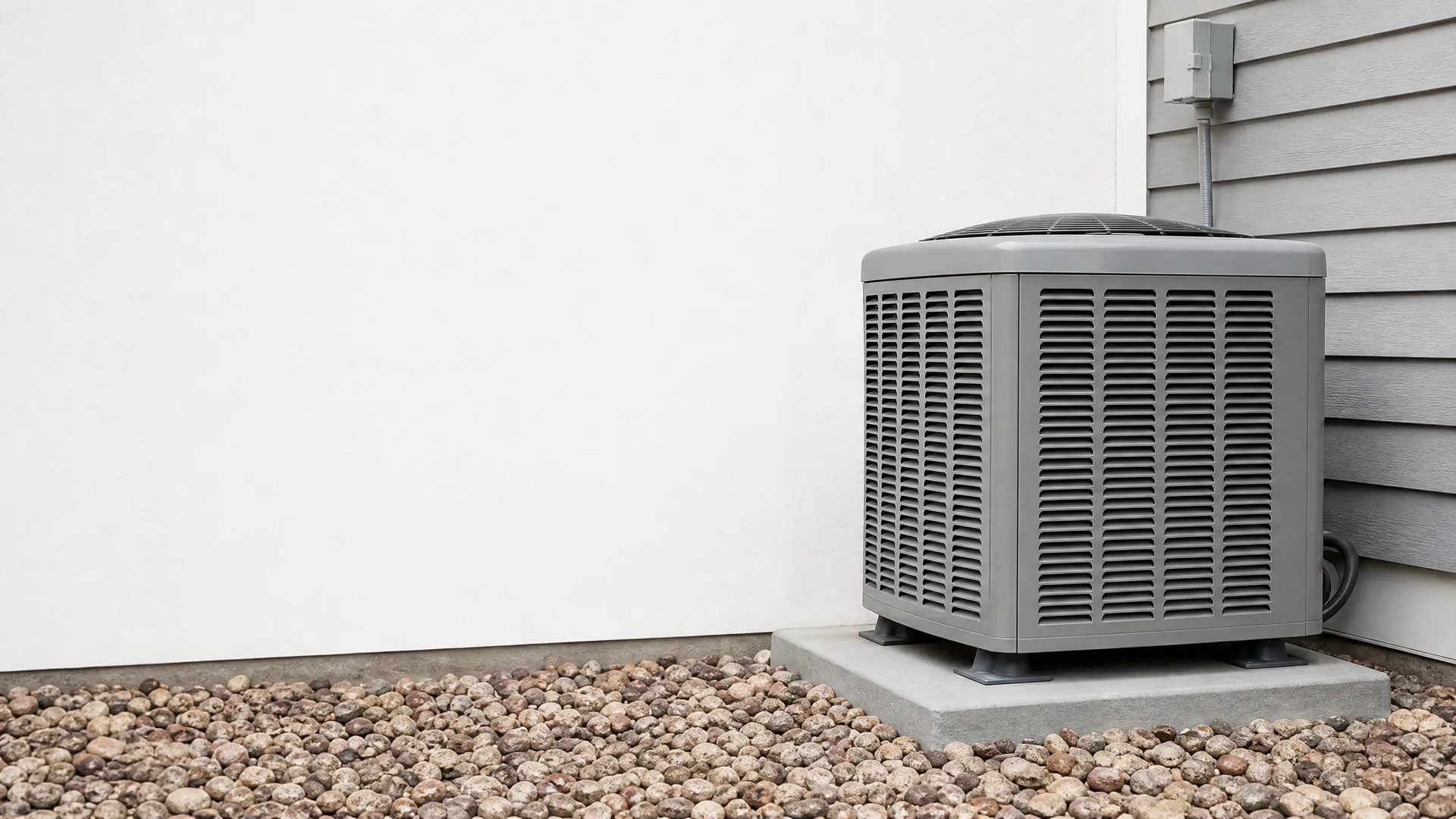
A system that's falling behind shows up in small ways before it quits. Rooms that used to cool down fast now take longer, or never quite get there on the hottest days. The unit outside runs longer and more often than it used to for the same stretch of weather. Your electric bill climbs past what June and July usually run, even though nothing in your routine changed. None of that means the system is done, but it means it's working harder than it should.
At 14 cents a kilowatt-hour, a system that's straining to cool your house shows up fast on the bill. A dirty coil or low charge makes your AC run longer to do the same job, and every extra hour it runs is an hour you're paying for at that rate.
EIA-861 2025 statewide residential average
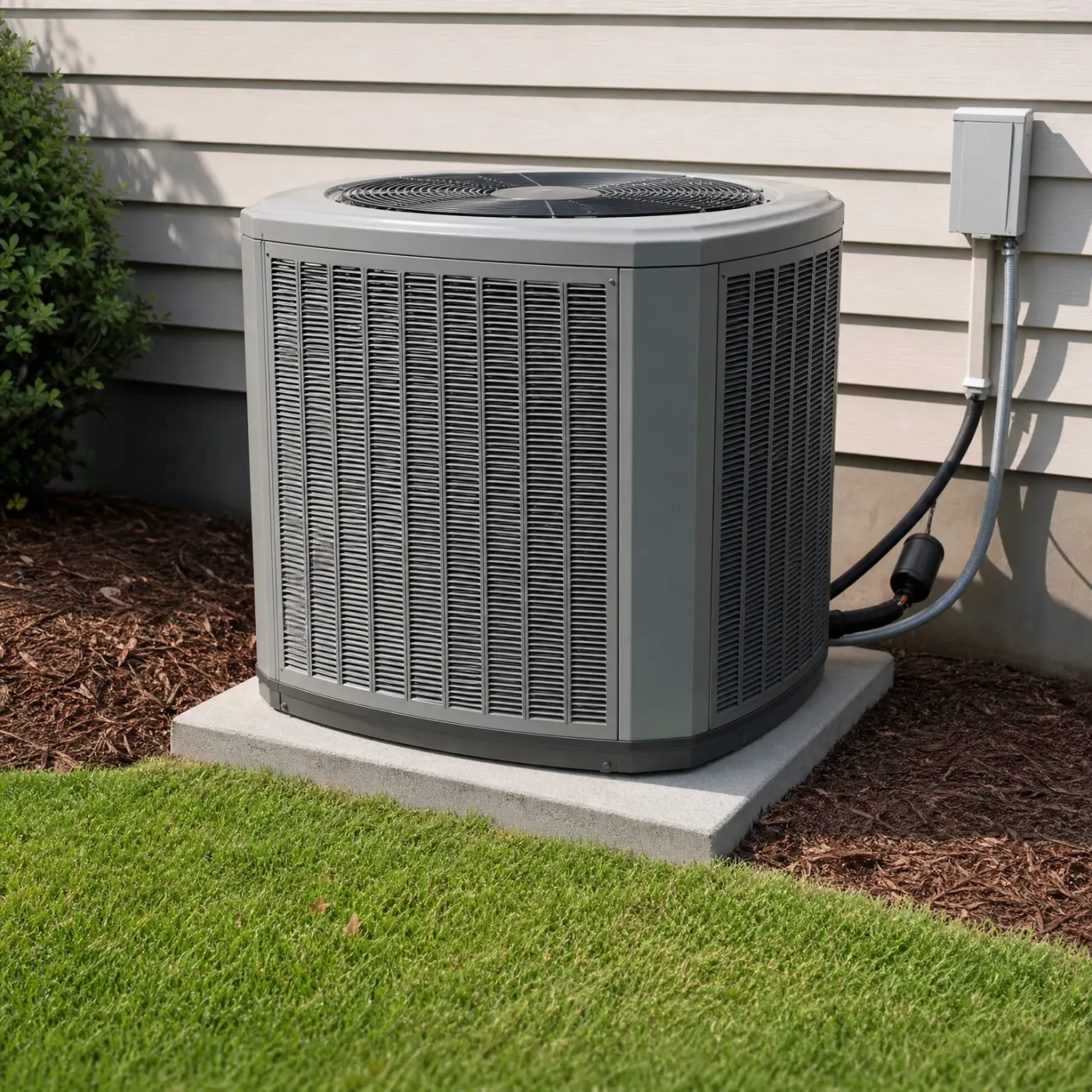
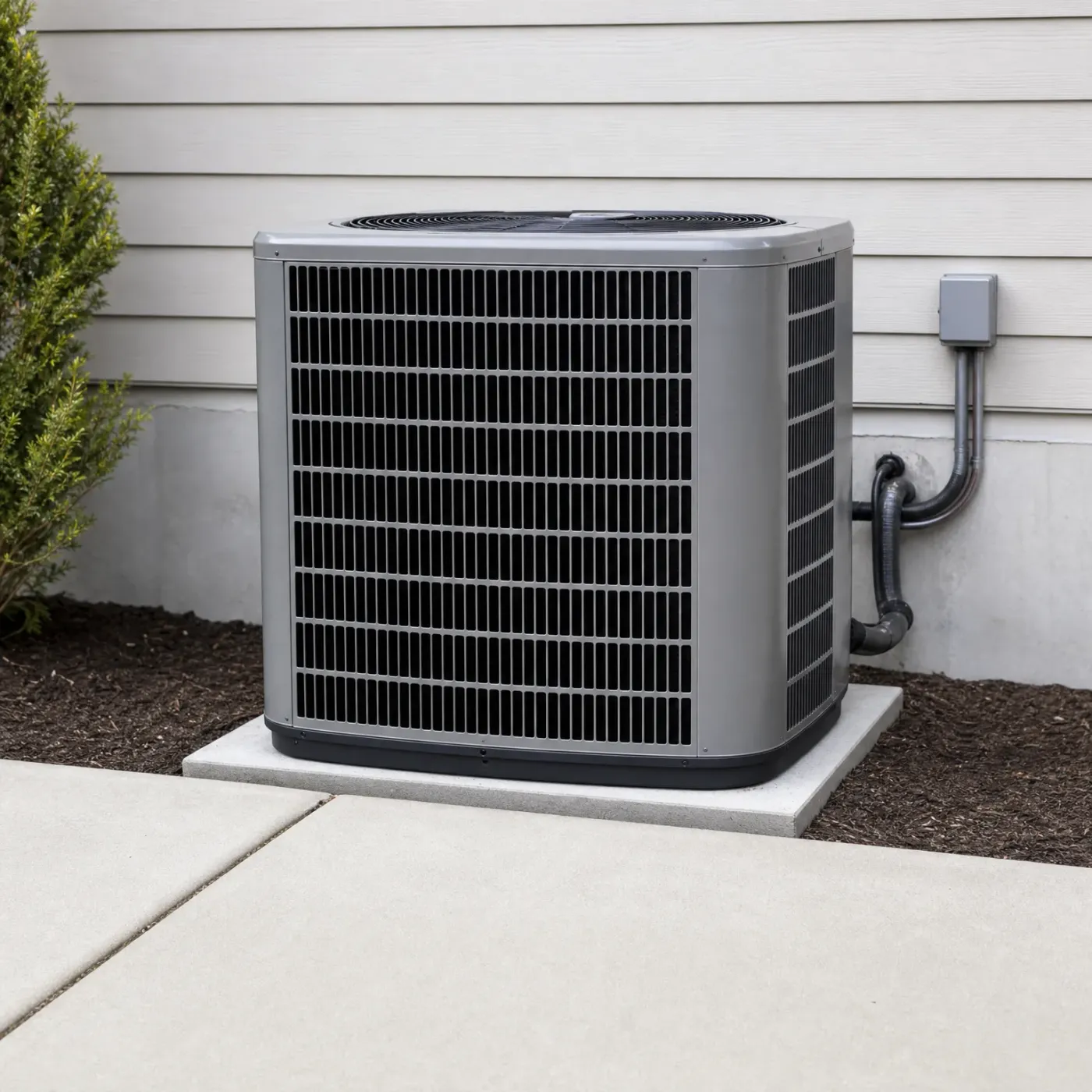
This is what a serviced system looks like, condenser clean, lines intact, sitting on its pad doing its job. Air moves through clean coils and the unit cycles off instead of running straight through a sticky June afternoon.
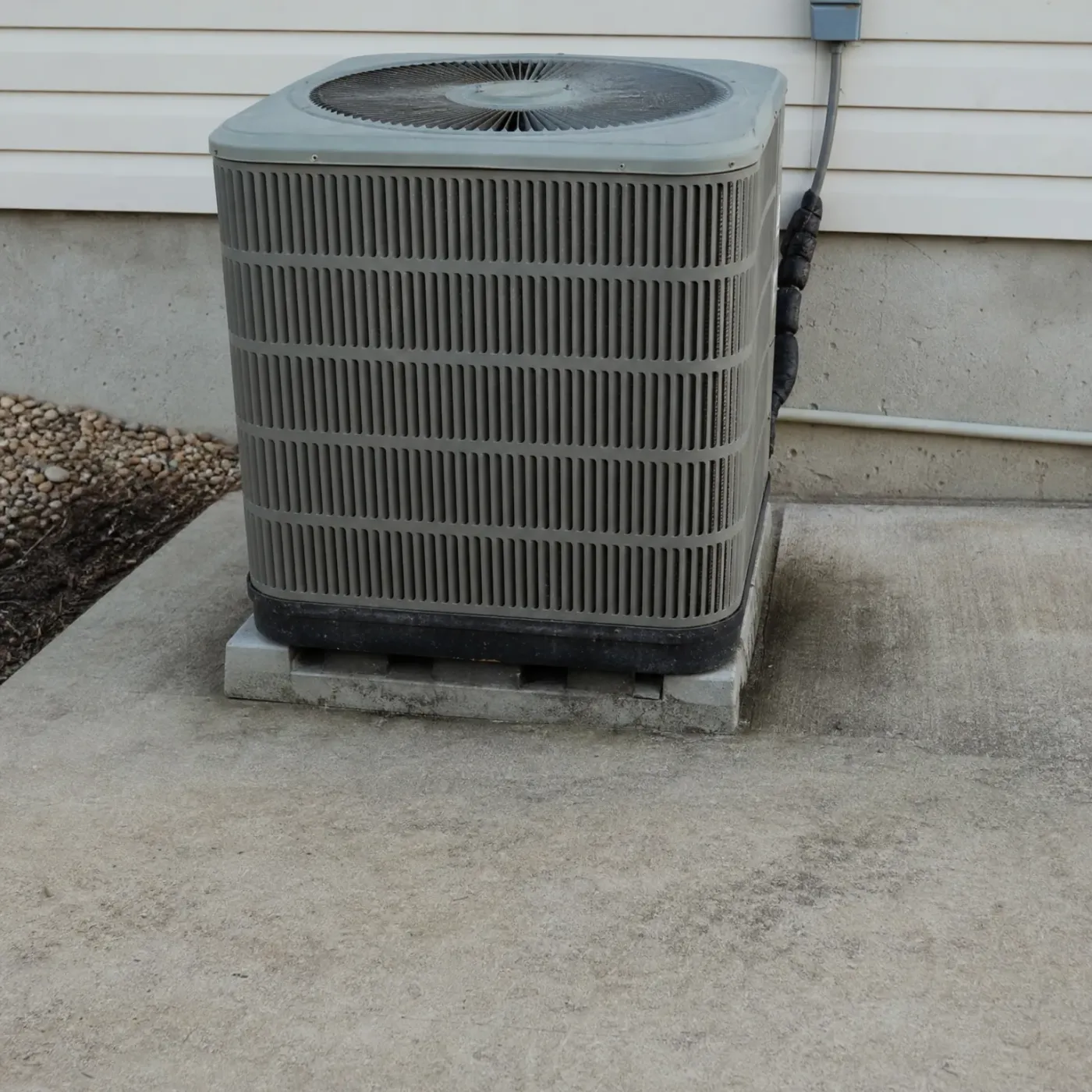
Nothing looks wrong from the yard. But a weak capacitor or a coil losing its grip on heat is still in there, and the unit keeps running anyway, longer each time, until the afternoon it doesn't start back up.
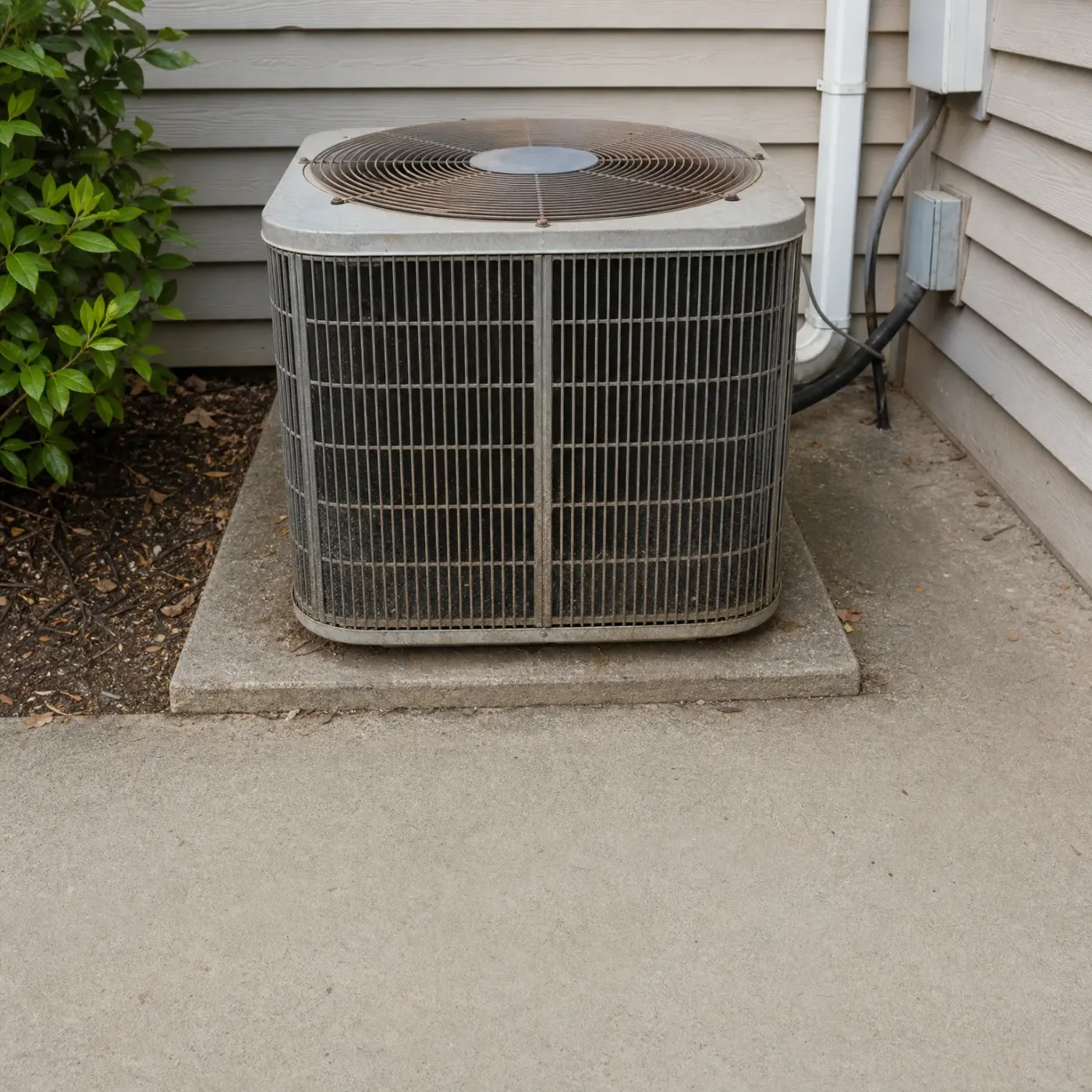
Skip calling around to set up an air conditioner tune-up.
Sending the form costs nothing.
A technician works through the system in order, outside first. The condenser sits out in the weather all year, and grass clippings and dirt pack into the fins until the coil can't let go of heat the way it needs to. That gets washed out before anything else happens. Inside, the evaporator coil and blower get their own check, because between the two of them they decide how fast cold air actually reaches your rooms. From there it's the refrigerant charge, measured against the number stamped on the unit when it was built, not just added to until it seems about right. A system running low on charge will still turn on, it just won't pull the humidity or the heat out of your house the way it should. The capacitor gets tested under load rather than just looked at, since a weak one can still kick the compressor on in a cool April and quit outright in July. The condensate drain gets cleared too, often the thing people forget, because a clogged drain line will shut a system down on its own before refrigerant or wiring ever becomes the problem. Last comes the electrical, tightening connections at the contactor and elsewhere, since a wire that's a little loose heats up more with every hour the system runs, and North Carolina summers mean a lot of those hours.



A spring check gets the coils clean, the charge right, and the electrical parts tested before the heat sets in. That's the whole answer. The system either gets that done in March or April, or it finds out what's wrong on a July afternoon with the rest of the county calling for the same help.
Finding someone to do the work is its own task, separate from the work itself. You'd normally be calling around, explaining the same thing to each one, waiting on quotes and sorting through them before anyone sets foot near your condenser. Answer this and you skip that part. You get matched with a contractor who handles what your system needs, and they reach out to you.






One form instead of hunting for a pro who does air conditioner tune-ups.
You're not committing to anything by asking.