






Profile view of a bearded man wearing a black baseball cap and a dark gray T-shirt against a plain light background.

Signs of a bad AC capacitor in North Carolina

Step 1 of 3: Equipment

What are the signs of a bad AC capacitor?

Your AC has been acting up and you're trying to figure out why before you call anyone. Maybe it's humming but the fan isn't turning, or it shut off on its own on a hot afternoon and won't start back up. In North Carolina summers, a few hours without cooling is enough to make the house uncomfortable fast, so you want to know what you're dealing with.

A bad capacitor usually shows up as a humming outdoor unit that won't start, or one that shuts off on its own

The capacitor gives the compressor and fan motor the jolt of power they need to start turning. When it weakens, the fan may hum but not spin, or the whole unit may click off and on by itself as it struggles to keep running. Some units need a push to start, like a tap on the side panel that gets the fan moving again for a bit. You might also notice warm air coming through the vents, or the outdoor unit running hotter than usual to the touch. In North Carolina heat, a weak capacitor tends to fail completely on the hottest, hardest-working afternoons rather than giving out gradually.

A woman with long wavy brown hair in a grey ribbed sweater sits on a couch indoors, looking toward a window, with a potted palm-like plant and fireplace behind her.
A woman with long brown hair wearing a green V-neck top and beige cardigan sits on a light sofa, looking off to the side, with a dining table, lamp and framed picture in the background.
A woman with long dark hair in a cream knit sweater sits on a beige sofa indoors, looking toward a bright window with a houseplant and framed picture in the background.
A woman with long dark hair in a green knit sweater sits on a couch indoors, smiling and looking toward a window with a blurred room behind her.
A man seen from behind raises his hand to wave at a woman standing in the open front doorway of a single-story house with gray shingle siding, white columns and a gabled porch entry.

When the capacitor goes, it usually happens on the worst day for it

A failing capacitor doesn't wait for a mild afternoon. It tends to give out when the unit has been running hardest, which in North Carolina means the stickiest part of summer, with the house full of people trying to stay cool. If the outdoor unit hums and the fan sits still, or the whole system clicks off and refuses to restart, that's not something to leave for later. The longer the compressor tries to start without the push a good capacitor gives it, the more strain it puts on itself, and a compressor is a far more expensive problem than a capacitor.

You don't have to figure out if it's really the capacitor or something else wired into the same part of the system. Once you send in the details of what you're seeing and hearing, a licensed contractor in your area gets matched to your situation and reaches out to you. From there, the work of tracking down the right technician is off your plate, and you can stop guessing and let someone who does this look at it directly.

A gray upholstered sofa with a textured cushion sits beside a dark round side table holding a vase of green foliage, with a table lamp and sheer-curtained window behind.
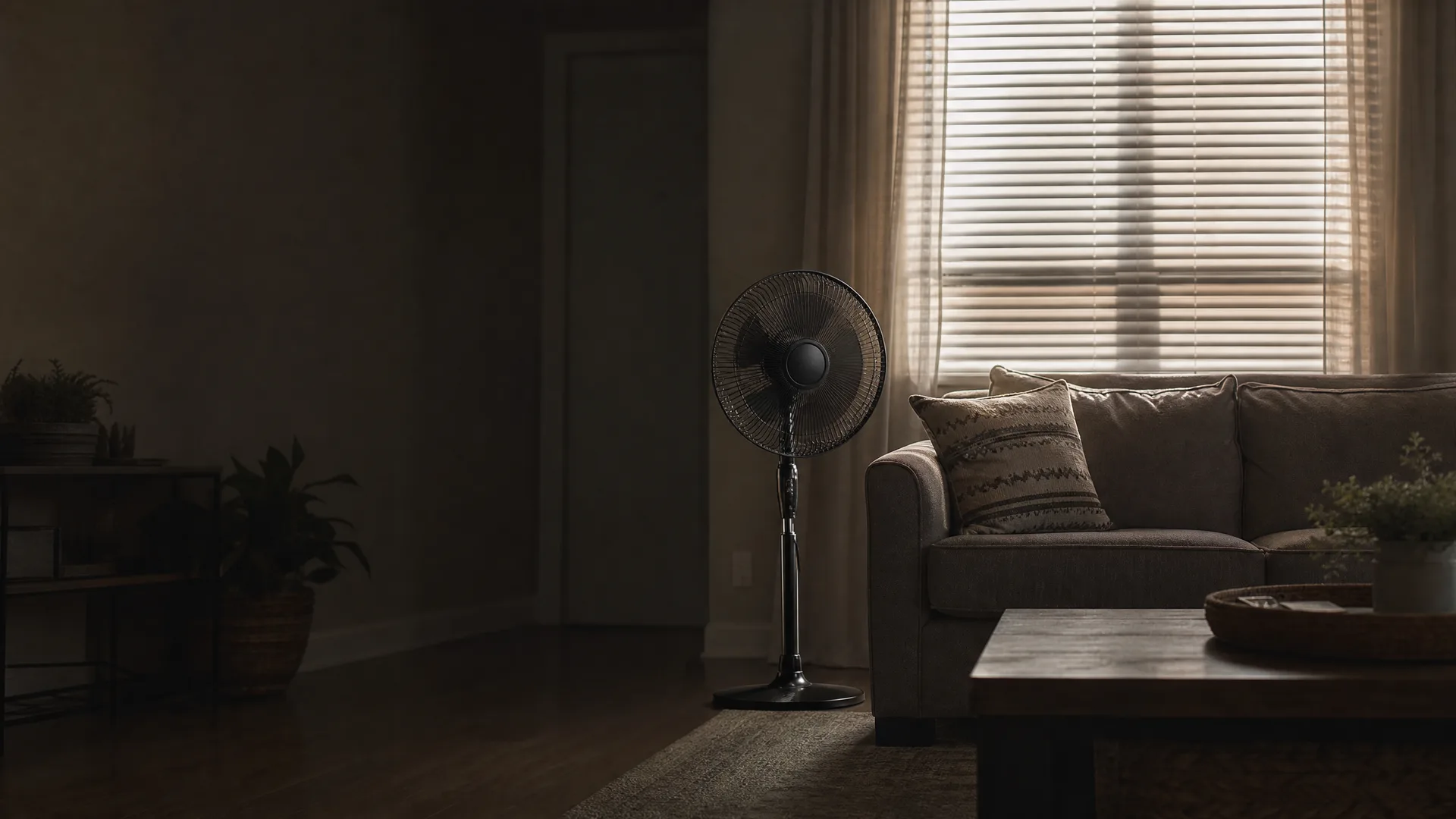
A dimly lit living room with a black pedestal fan on a wood floor beside a gray sofa with a patterned pillow, a wooden coffee table in the foreground, potted plants at left, and a curtained window with blinds behind.

The blinds are drawn against the sun, but the room still feels close. It's past three and the floor fan by the couch is doing what the AC should be doing, pushing warm air around instead of cooling it. You've checked the thermostat twice. The outside unit hums when you walk past it, but no air is coming through the vents, and the house is holding every degree of the afternoon. Someone's asleep on the couch with a damp towel on their neck. You've already decided you're not waiting this one out. You pull up the form on your phone, put in your name and your number, and set it down to go check the vents one more time.

A local pro for your air conditioner repair

Send the request today and stop worrying about who to call.

There's no charge for the request.

The capacitor's actual job

The capacitor stores a charge and releases it to get the compressor and fan motors started, then keeps current flowing steady while they run. It works like a small reservoir of electricity sitting right at the unit. When it's weak, the motors don't get the jolt they need to start, so they stall, hum, or spin slow before giving up. A good capacitor holds a specific charge rating. Heat and age wear that capacity down over years of North Carolina summers, until one day it can't deliver enough to do the job.


Why a humming unit still isn't cooling

A motor that hums but doesn't turn still has power getting to it. What it lacks is the push to overcome the resistance of starting from a dead stop. That push comes from the capacitor's stored charge, and without enough of it, the motor just sits there drawing current and building heat with nowhere to go. This is different from a tripped breaker or a dead thermostat battery, both of which cut power entirely. If the unit has power and is making noise but going nowhere, the capacitor is a reasonable place to look first.

A gray-haired woman in a cream knit sweater stands in a dimly lit kitchen at night, looking to her right, with a round loaf of bread in the foreground and a dark window and potted plant behind her.
A woman with her hair in a bun holds a sleeping young child against her chest, both wrapped in a textured beige knit blanket on a sofa in a dimly lit room with a lamp, framed picture, and bookshelf behind them.

A capacitor that's just starting to go can still get the AC running. The air comes on, the house cools, and nothing seems wrong yet, even though the part is already weak.

A capacitor that's fully failed won't get the AC running at all. You'll hear a hum from the outdoor unit, or nothing, and the air inside won't move no matter how long you wait.

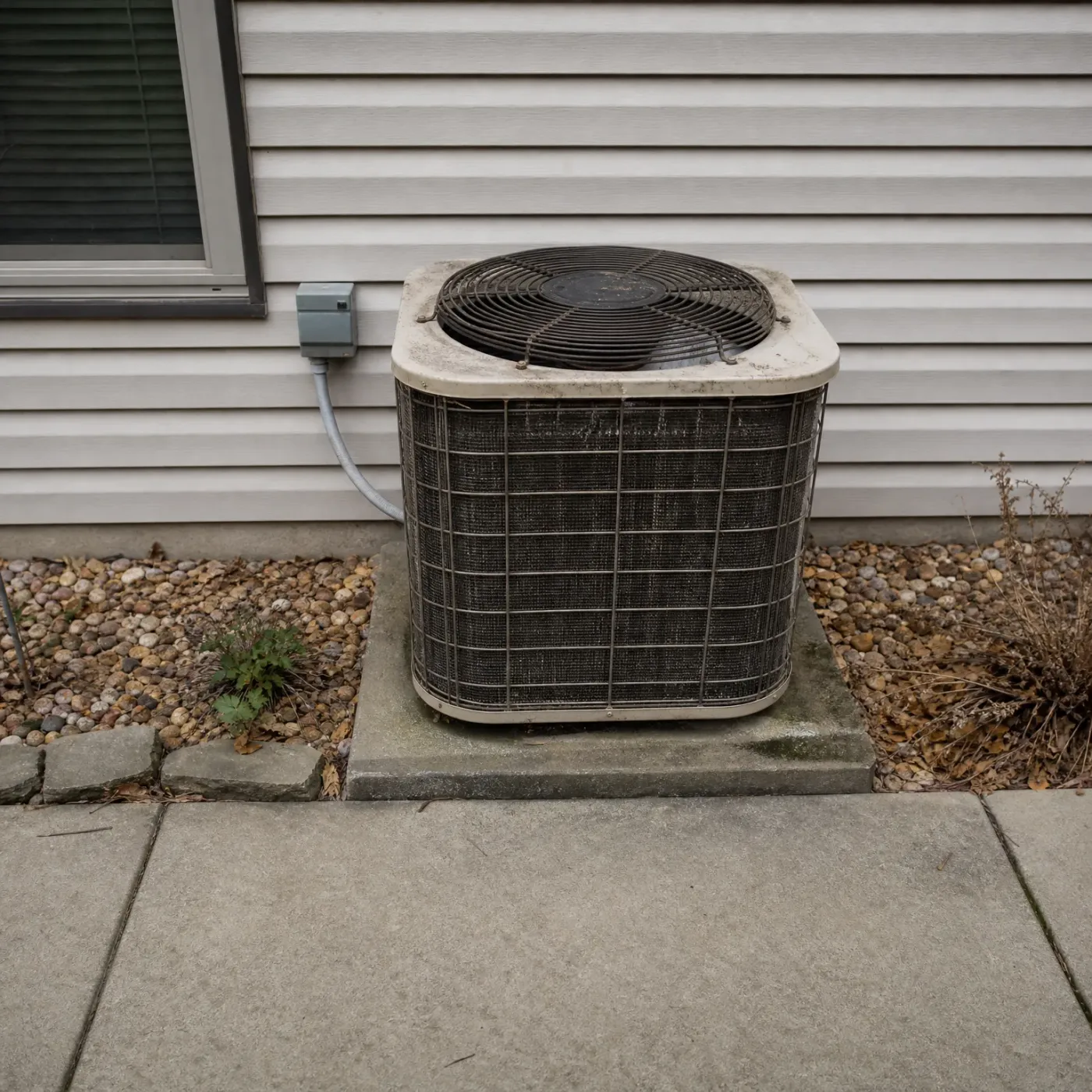
An outdoor air conditioner condenser unit on a concrete pad beside a house with light gray vinyl siding, with a gray electrical disconnect box and conduit on the wall, gravel beds and dried plants nearby, and a concrete sidewalk in the foreground.
Before you get your air conditioner repair
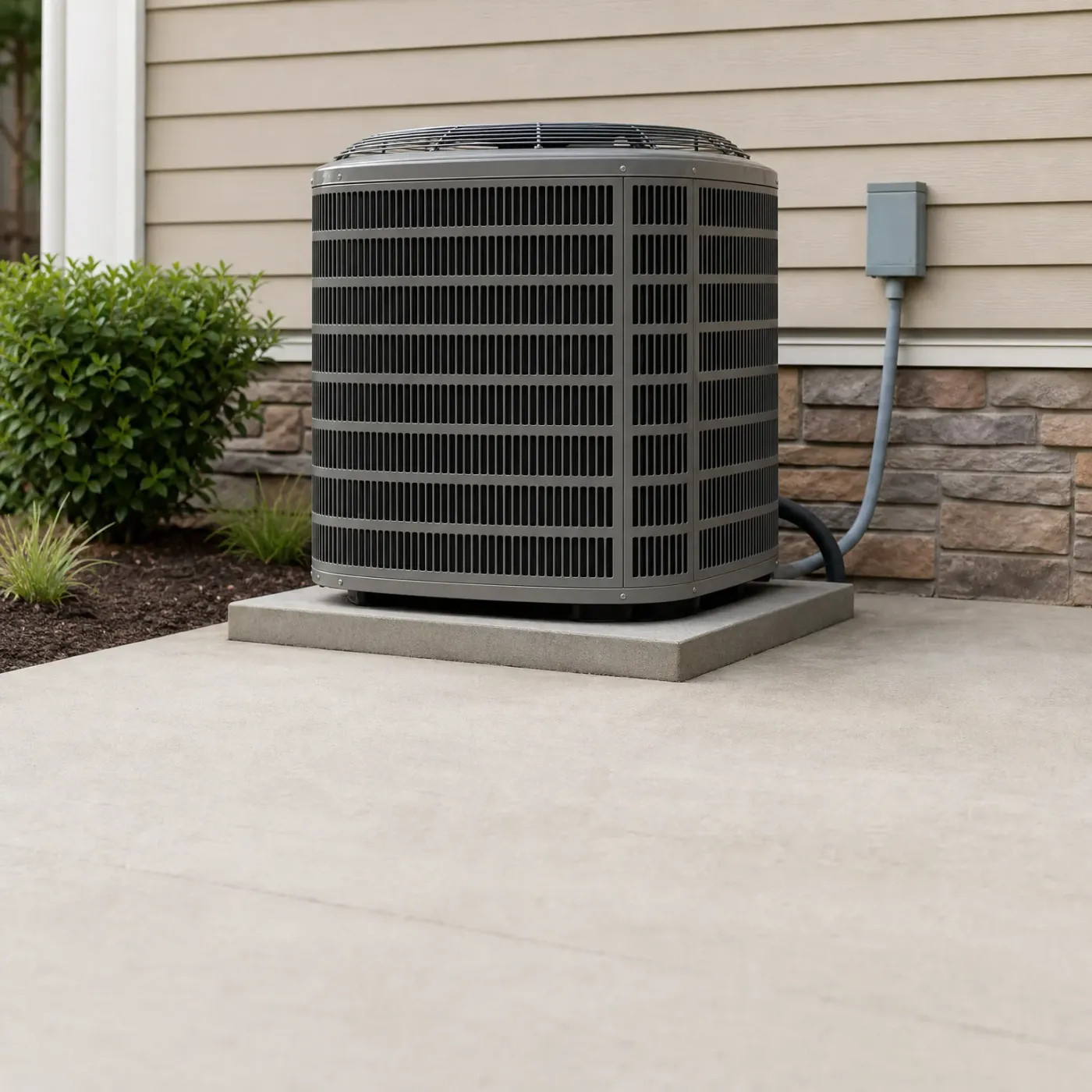
A gray outdoor air conditioning condenser unit on a concrete pad beside a house with horizontal siding and a stone veneer base, with a wall-mounted disconnect box and conduit, next to a shrub bed and a concrete patio.
After you get your air conditioner repair

Running the AC on a bad capacitor

A weak capacitor doesn't shut the system down right away. The compressor still kicks on, the house still cools, but the motor is working harder to start each time because it isn't getting the steady charge it needs. That strain adds up. It shows up as a higher power bill before it shows up as a bigger problem, and it shortens the life of the compressor itself, which costs far more to replace than the capacitor does. Running it this way for weeks doesn't fix anything. It just moves the day the unit quits from a question of if to a question of when, usually on whichever afternoon the heat is worst.

Getting the capacitor replaced

A new capacitor restores the steady charge the compressor and fan motors need to start without strain. The hard starts stop, the hum disappears, and the unit goes back to cooling the way it did before any of this started. There's no workaround or setting that does the same job. It's a specific part doing a specific job, and when it's the right one in good condition, that part of the system stops being something you have to think about. Getting matched with a contractor who handles this means you're not the one tracking down who's available or qualified to do it. That part is off your plate once the form is in.

Power costs 14.00 cents per kilowatt-hour statewide

At 14 cents a kilowatt-hour, a failing capacitor costs you more before it quits than after. The compressor straining to start pulls extra power each time it cycles, so your bill climbs while the unit still seems to be working. Once it's replaced, the draw drops back to normal.

EIA-861 2025 statewide residential average

A humming unit that won't start, a fan that won't spin, an AC that quits on the hottest part of the afternoon and won't come back. Those are the signs, and a bad capacitor is usually behind them. It's a small part, but the compressor and fan motors depend on it to start and keep running, and once it's too weak, the strain shows up in your power bill before it shows up as a full breakdown. You don't have to figure out which stage yours is in. Send the form and the job of finding someone who can look at it is off your plate. A contractor who covers your part of North Carolina will reach out, and from there it's a straightforward fix, not a mystery. Your house gets back to cool, and you stop checking the thermostat wondering if it's the unit or just a hot day.

Sunlight falls across a beige upholstered sofa with a textured woven cushion and a chunky knit throw, beside a dark wood cabinet holding a ceramic vase with green leafy branches, near a white-framed window.
A sunlit corner of a room with a wooden side table holding a ceramic vase of green foliage and a wooden bowl, beside a light upholstered sofa with a knit throw and rust-colored pillow, with window shadows cast on a beige wall.
A sunlit room corner with beige walls, a white-framed window with sheer cream curtain, wood floor with a light rug, and a woven basket holding a knit blanket.
A beige ceramic vase holding a leafy green branch sits on a wooden cabinet in a corner, with sunlight through a sheer curtain casting leaf shadows on the wall.
A grey upholstered sofa with a rust-orange velvet cushion and a textured throw sits beside a window with linen curtains, next to a wooden side table holding a pale ceramic vase of olive branches.

Get the right pro for your air conditioner

Send the request and finding a pro stops being your problem.

Get a local pro

You only hire the pro if you want to.