
Running clean
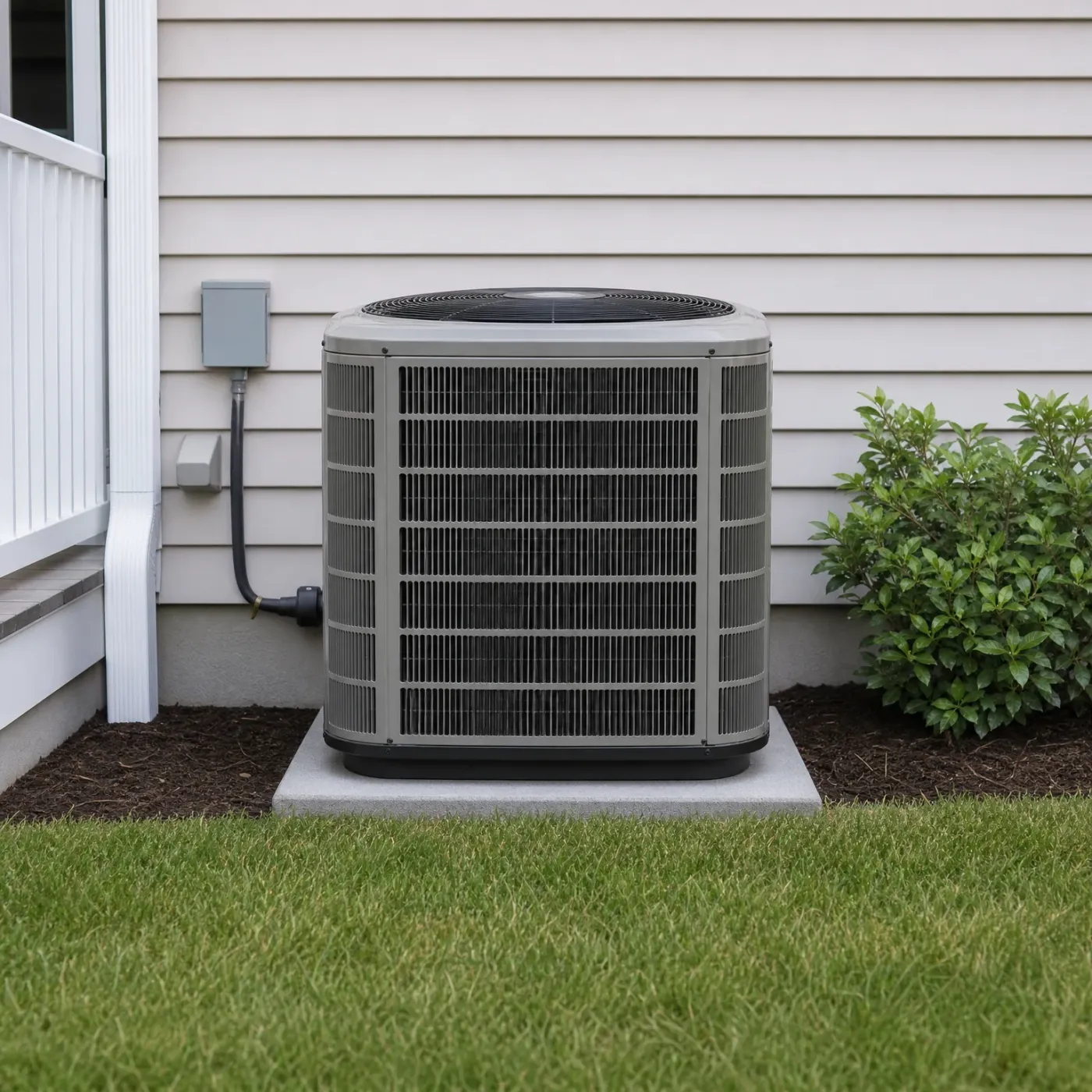
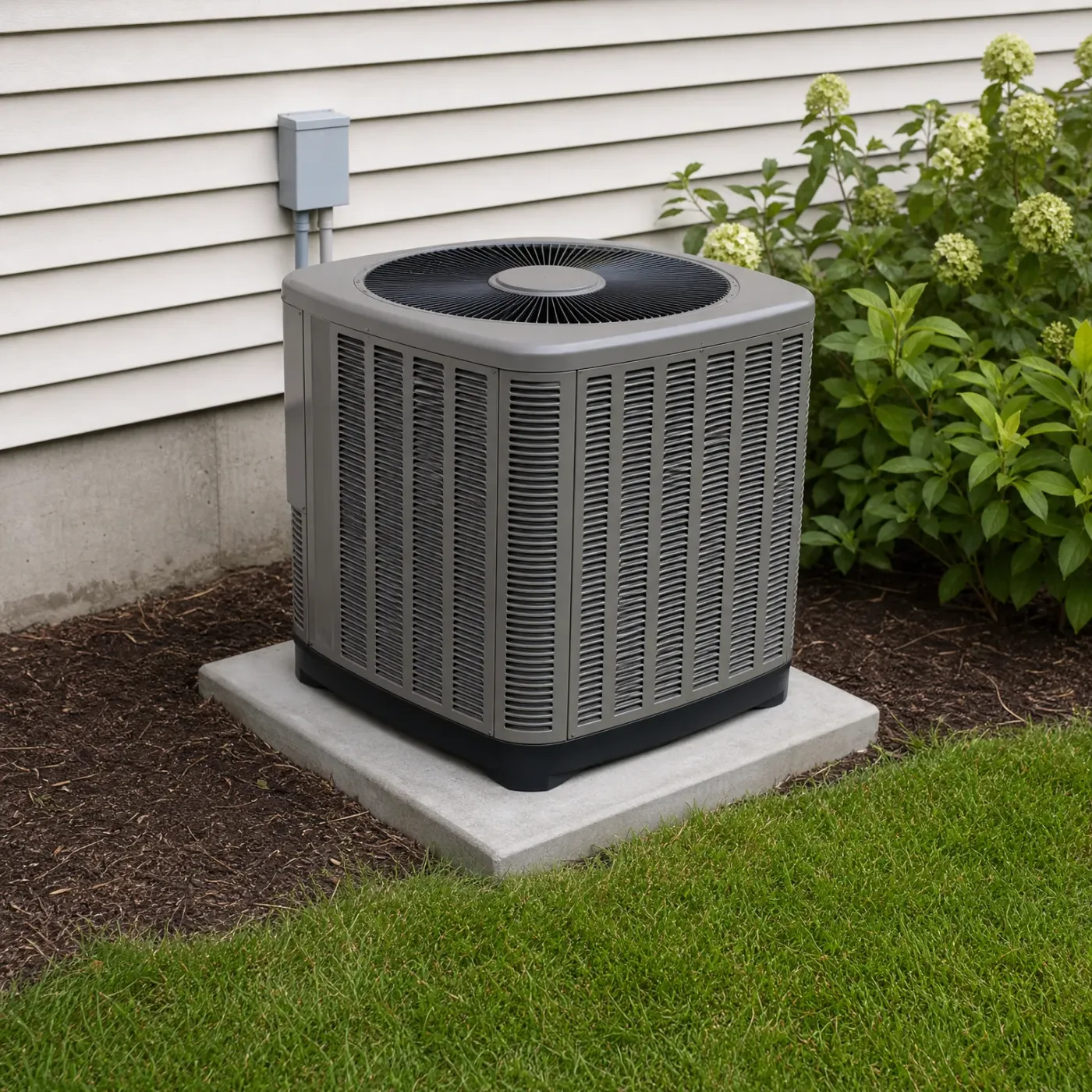
This is what a condenser looks like when nothing's wrong. The fins are clear, the casing is clean, and the unit cycles on and off without any smell reaching the house. Air moves through it the way it's supposed to.
 Skip the calls
Answer a few questions instead of calling shop after shop.
A burning smell from your AC is not something to wait out, not in a North Carolina summer when the system runs for hours every day. The smell usually means something electrical is overheating, a motor bearing is going, or dust burning off a part that just kicked on after sitting idle. Some causes clear up on their own. Others mean a wire or a component needs attention before it fails outright, maybe taking a bigger part down with it.
Finding out which one you have means getting a contractor to actually look at the unit. That is normally its own chore. You search, you find a handful of listings, you call one, get a voicemail, call another, get a quote with no visit involved, and end up explaining the same smell, the same symptoms, the same questions over and over before anyone shows up. By the time someone's actually on their way, you have spent as much time chasing help as the repair itself might take.
This page connects you with one licensed contractor local to North Carolina, someone who works on AC systems through the same heat and humidity you're dealing with and knows what tends to fail when a system runs hard for months straight. You are not getting a list of five companies to sort through and compare, and you are not fielding calls from people who never show up. You get one contractor, matched to your situation, who can tell you whether that smell is a quick fix or something more.
Your part is answering a few questions about what you're noticing: when the smell shows up, whether it's constant or only at startup, whether you've noticed anything else like strange sounds or warm air from the vents. That's what gets the right person looking at your unit instead of you doing the legwork of finding them first.
You walked past the vents and caught it, a hot, dusty smell with an edge like something electrical. Your AC has been running most of the day, which it does for months at a time down here, and now you're wondering if it's about to quit on you or if there's something worse going on behind the wall or up in the attic unit.
A short burning smell when the system first kicks on after sitting all winter is usually just dust baking off the coil, and it clears in a few minutes. A smell that keeps coming back, especially one with a sharper, acrid edge, points to something else: a capacitor breaking down, a blower motor whose bearings are going, or wiring that's gotten hot where it shouldn't. Your system in North Carolina runs for hours at a stretch through the summer, and that kind of runtime is hard on a part that's already weak. If the smell keeps showing up, or if you see any haze near the vents, shut the system off at the thermostat and have it looked at before running it again.
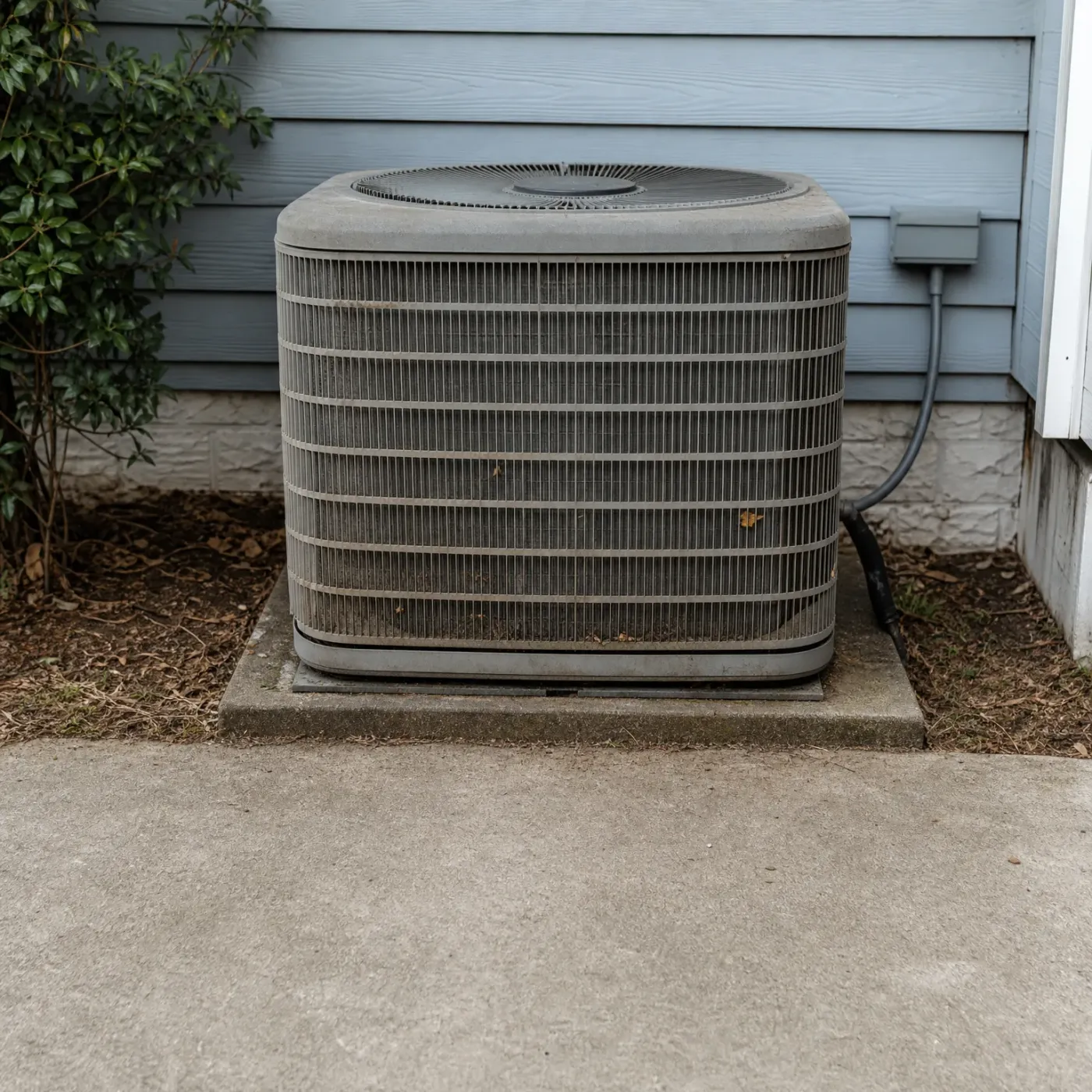
Dust burns off a condenser coil or motor housing first.
A failing capacitor makes the fan motor work and overheat.
Overheated motor windings give off a hot, sharp smell.
Loose or frayed wiring arcs and burns its insulation.




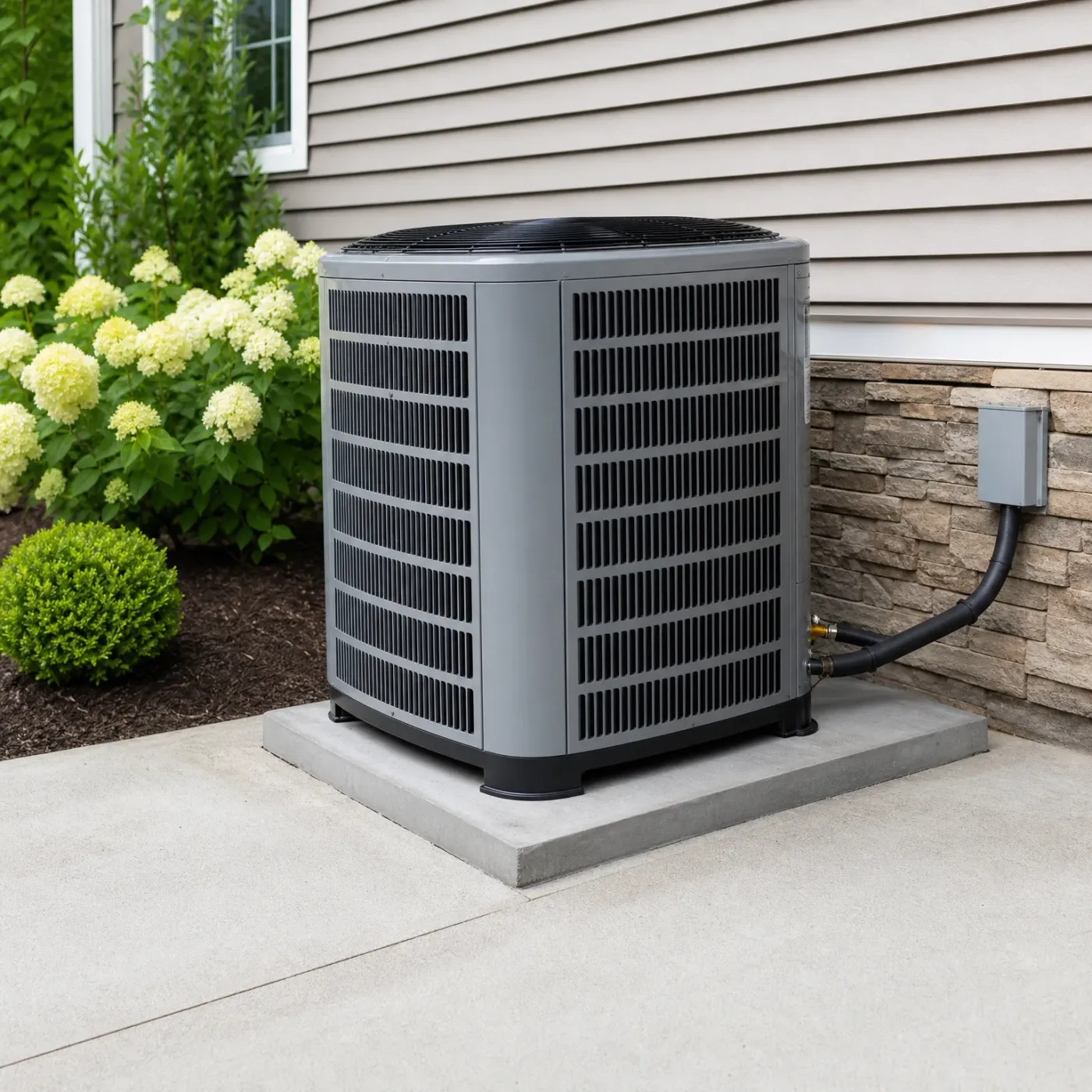
This is what a condenser looks like when nothing's wrong. The fins are clear, the casing is clean, and the unit cycles on and off without any smell reaching the house. Air moves through it the way it's supposed to.
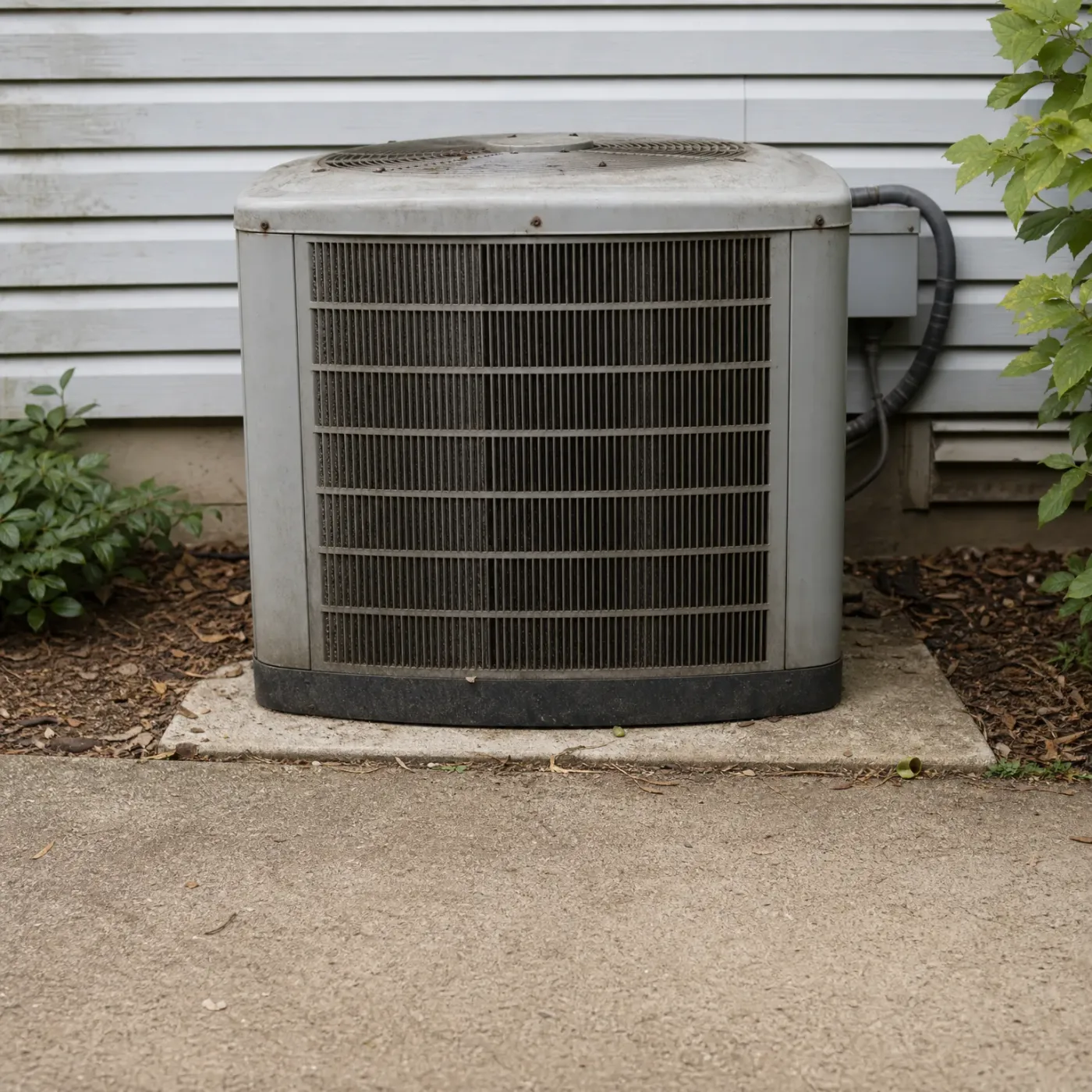
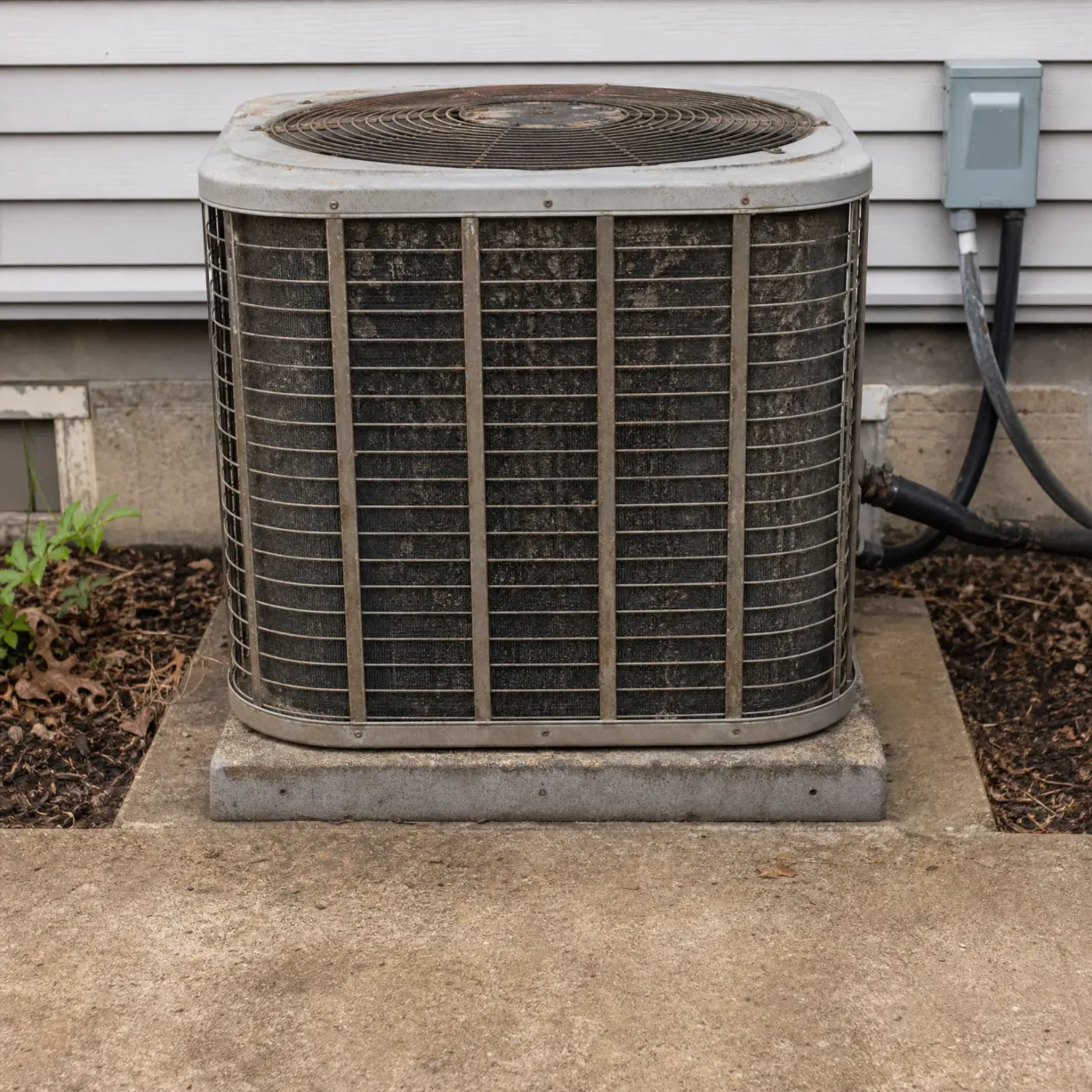
Years of dust and grime have packed into the fins and casing on this one. That buildup holds heat against the motor and wiring inside, and it's often what you're smelling when a unit this worn kicks on in the heat.


A burning smell is not a job to shop around on while your house sits at ninety degrees. Instead of calling three or four companies, describing the smell to each one, and waiting on quotes to come back, this request goes to one licensed contractor who works on AC systems in North Carolina all summer and has smelled this before. They know a hot, dusty smell usually clears up on its own once the unit's been running a few minutes, and they know what it means when it doesn't. That's the difference between a capacitor that's about to take the motor with it and wiring with burnt insulation, and it's not something to guess at over the phone with five different companies. One contractor gets your situation once. No explaining it again, no sorting through quotes, no waiting for someone to call back while the system keeps running hot. Get it checked before the smell tells you something's already failed.

NOAA puts the average summer dew point across North Carolina at 67°F, the number that tells you how heavy the air actually feels, not just how hot. Your AC isn't just cooling that air, it's wringing the moisture out of it, and that part of the job doesn't let up at 67. The compressor and fan run longer each cycle to keep up, which means more hours of heat building up in a motor or a connection that's already starting to fail. If something inside is overheating, a sticky summer like this is exactly when you'll smell it.
NASA POWER T2MDEW county cells weighted by homes
The smell itself is a symptom, but what happens next is what costs you. If it's dust burning off a coil that just kicked on after sitting, it clears up in a few minutes and doesn't come back. If it keeps showing up every time the system runs, something inside is already failing, and your house is the thing sitting between that part and whatever it affects next. A blower motor that overheats enough to smell doesn't cool off and reset. It keeps running hotter each cycle until it quits, and when it quits, nothing moves air through your ducts, upstairs or down. A capacitor that's starting to go does the same thing to your electric bill before it fails outright, pulling more current each time it tries to start the fan. And if what you're smelling is wiring, insulation burning off a wire that's arcing behind the access panel, that's not a comfort problem. That's a fire hazard inside a cabinet that sits against your house, often a few feet from a wall. None of this means panic. It means a system telling you something's wrong while it's still a repair, before a hot July afternoon turns it into total failure with your house climbing past ninety degrees and no cooling until someone gets out to fix it. The smell is the warning. What it's warning about depends on where it's coming from, and that's worth having someone qualified look at before it decides for you.
At 14.00 cents a kilowatt-hour, a motor that's overheating and drawing more current than it should shows up on your bill before it shows up as a breakdown. The part burning that smell off isn't cooling your house any better for the extra power it's pulling.
EIA-861 2025 statewide residential average
A burning smell from your AC means a part is overheating or about to fail, and running it longer only gives that part more time to go. That's the answer, and nothing about a North Carolina summer makes it safe to wait on. Get it looked at before the smell turns into a dead blower motor or a wiring problem behind the panel. The request from this page goes to one licensed contractor near you, not a handful of companies competing for your callback. Someone who services AC systems in this area all summer has seen this smell plenty of times, in window units and whole-house systems alike, and knows the handful of things that usually cause it before they even open the panel. That's different from explaining your system to a new voice on the phone three or four times and hoping one of them calls back. You'll hear from someone who already knows what questions to ask and what to check first.
Describe it once